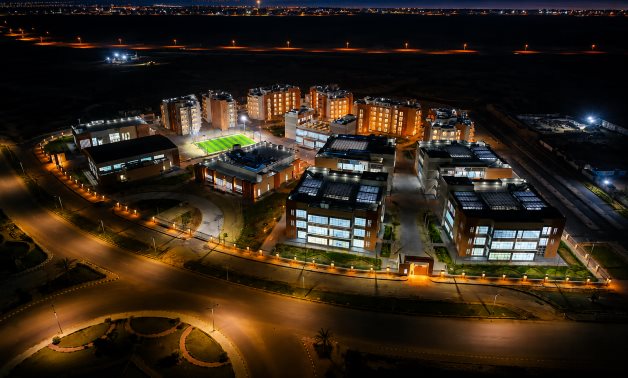
An aerial view of the new Senghor University campus in Borg El Arab, Alexandria.




CAIRO - 13 MAY 2026
In Borg El Arab, west of Alexandria, a new chapter in Africa’s educational and diplomatic story is quietly taking shape through Senghor University’s new headquarters, an institution increasingly positioned at the intersection of African development, diplomacy, education, and soft power.


In the sprawling urban expansion of Borg El Arab, west of Alexandria, a new chapter in Africa’s educational and diplomatic story is quietly taking shape.
The newly inaugurated headquarters of Senghor University is more than an academic campus. It is a statement of intent. A symbol of how Egypt is increasingly positioning itself not only as a regional political power, but also as a continental intellectual and developmental hub connecting Africa, the Mediterranean, and the wider francophone world.
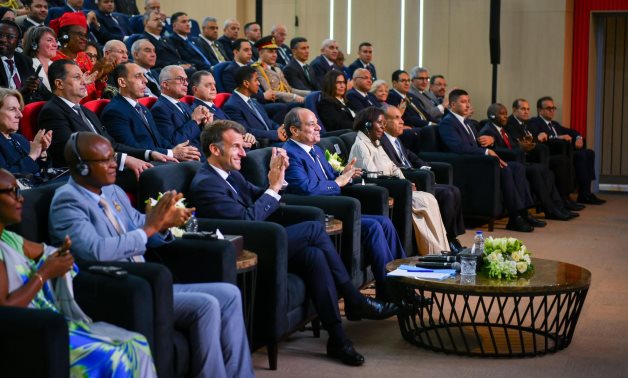
The opening ceremony, attended by Egyptian President Abdel Fattah El-Sisi and French President Emmanuel Macron, reflected the growing strategic depth of Egyptian-French relations at a moment when both countries are seeking a stronger role in Africa’s future.
But beyond the diplomatic symbolism and presidential appearances lies a deeper story about soft power, African development, education, and the race to shape a new generation of leaders capable of navigating a rapidly changing continent.
At the center of that story stands Senghor University.
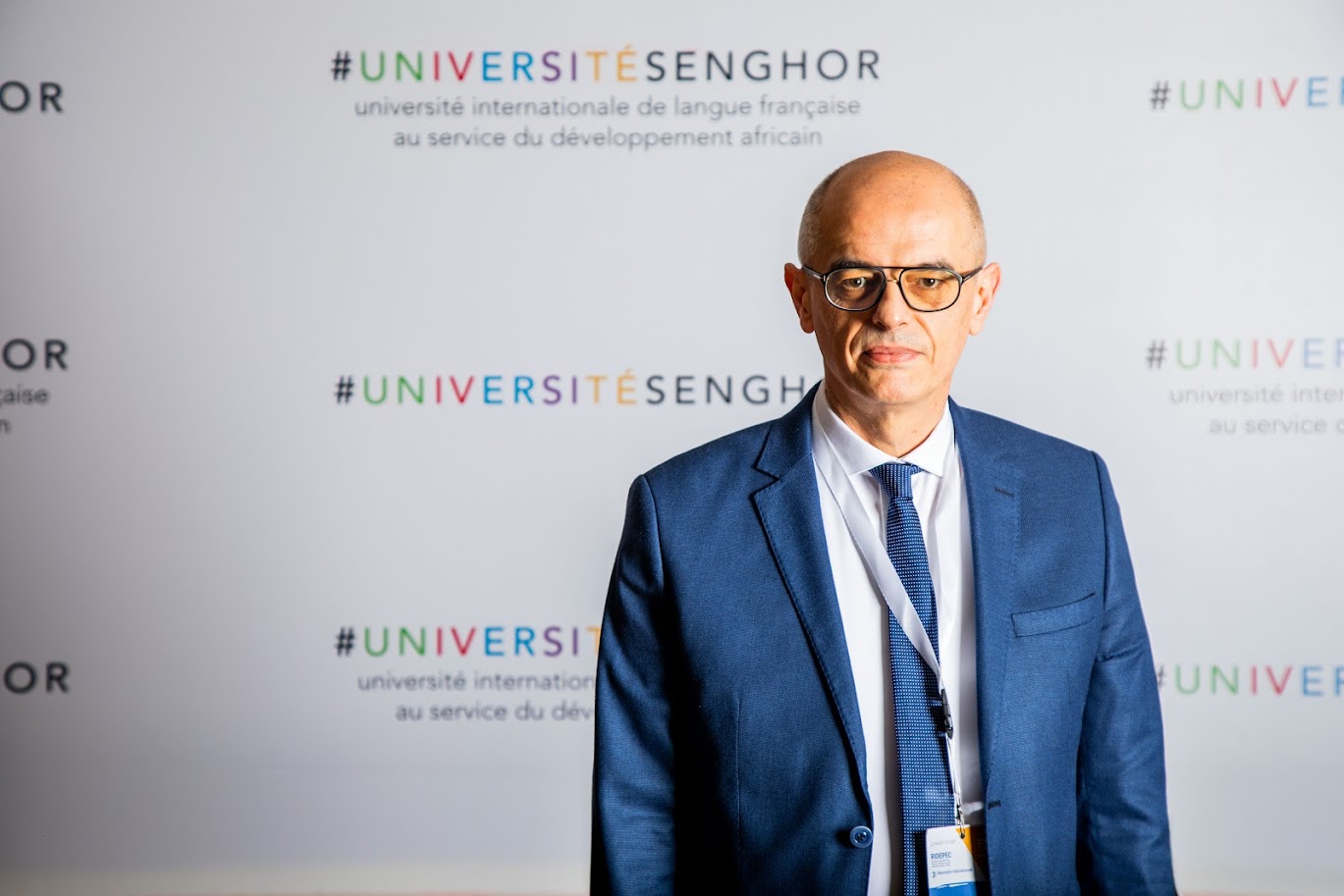
“Thierry Verdel described Senghor University as ‘a very unique university’ operating within the framework of La Francophonie and dedicated specifically to African development.”
Unlike traditional national universities, Senghor does not primarily aim to produce conventional graduates entering local labor markets. Its mission is far more specialized and transnational.
The university focuses on training junior and mid-career professionals capable of operating “at the interface between public policy, international institutions, and development practice,” while remaining grounded in African realities.
That model has become increasingly relevant in an Africa facing overlapping challenges:
Senghor’s academic philosophy is designed around practical development realities across the continent.
Senghor’s leadership believes the continent’s future depends not only on economic investment, but also on producing a new generation of policymakers, administrators, development experts, and project managers capable of translating ideas into workable realities.
And that is where Egypt enters the equation.
For decades, Egypt has sought to strengthen its African identity and influence, especially after years in which Cairo’s engagement with sub-Saharan Africa was perceived by some observers as inconsistent.
Under President El-Sisi, however, Egypt has dramatically expanded its African outreach through infrastructure diplomacy, development partnerships, security cooperation, educational initiatives, and regional mediation efforts.
Hosting Senghor University in Alexandria aligns perfectly with this broader strategic direction.
For many Senghor students arriving from francophone sub-Saharan Africa, Egypt represents their first direct exposure to the Arab world and the Middle East.
That cultural interaction may prove just as important as classroom instruction.
Students live together for two years, develop projects collectively, and interact with faculty members arriving from Europe, Africa, and North America for short-term teaching missions. The result is a rare multicultural environment designed to build continental and international networks that often continue long after graduation.
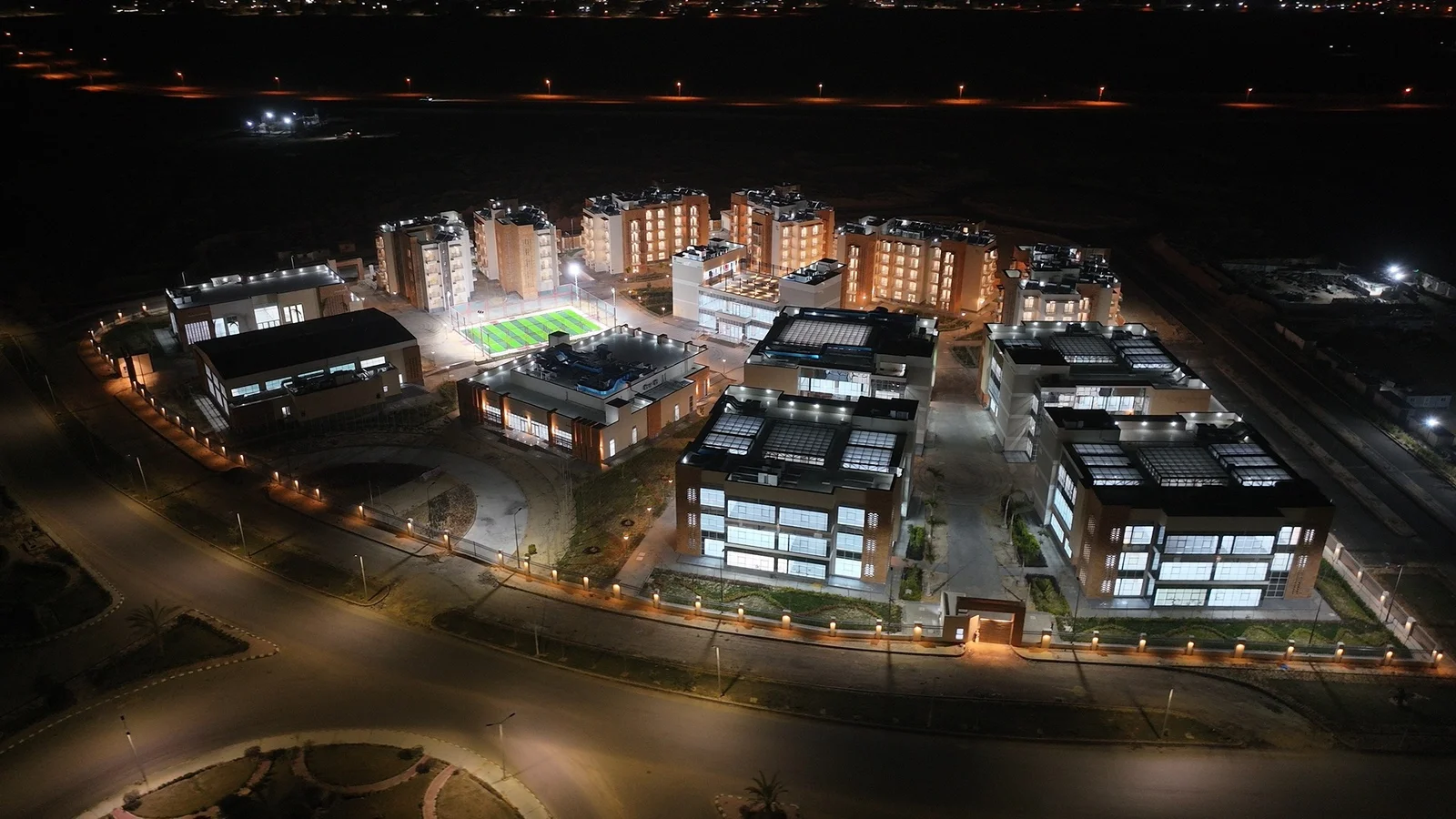
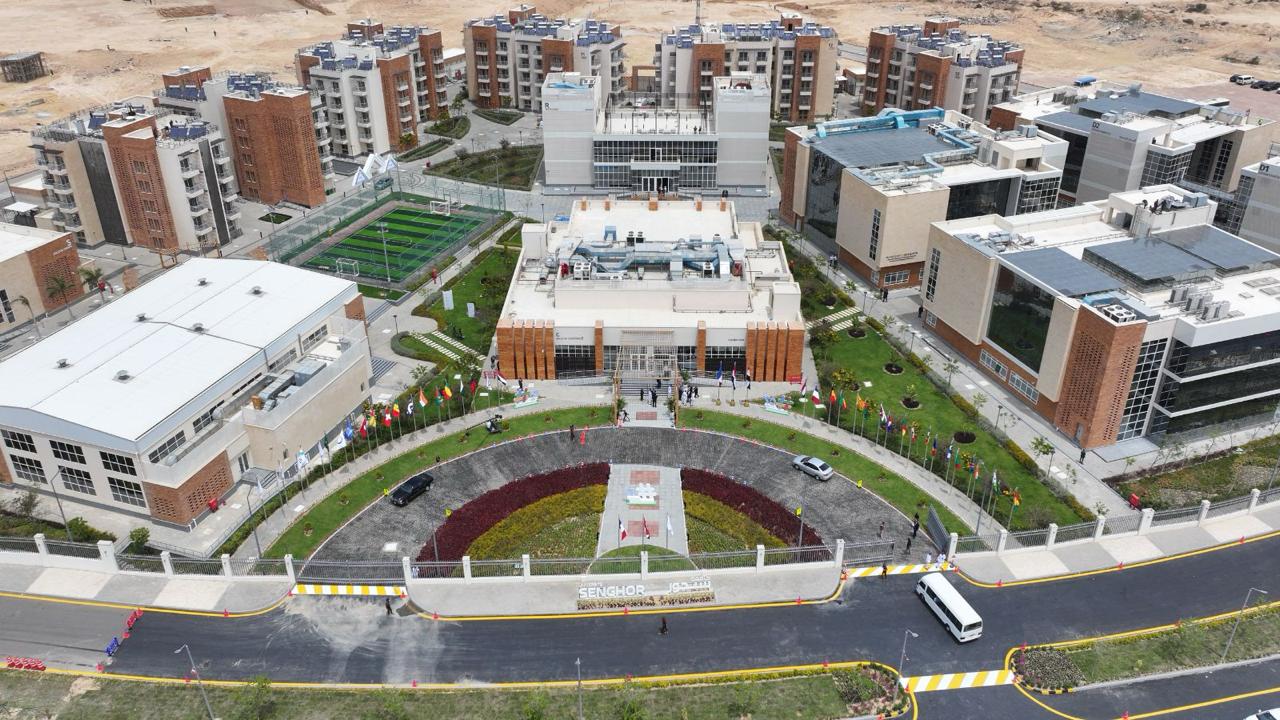
The university’s new campus also marks a historic milestone for the institution itself.
“Verdel stressed that the new headquarters is ‘not only a building,’ but the first time Senghor University has had its own permanent premises capable of hosting students on-site.”
That transition from a modest institutional model into a fully integrated campus signals the university’s ambitions for expansion and permanence.
French President Emmanuel Macron’s participation in the inauguration was not merely ceremonial.
It reflected France’s broader effort to redefine its engagement with Africa during a period of profound geopolitical change across the continent.
France has faced mounting criticism and declining influence in parts of West and Central Africa in recent years, particularly in countries where anti-French sentiment has grown amid political instability and military transitions.
Against that backdrop, Egypt offers Paris something increasingly valuable:
Senghor University, therefore, becomes more than an educational institution. It becomes part of a wider framework of Franco-Egyptian cooperation aimed at maintaining influence through education, culture, development, and institutional partnerships rather than traditional political tools alone.
The university’s francophone identity also serves an important purpose.
While Africa’s linguistic landscape is diverse, the francophone world still represents a massive political, economic, and cultural network stretching across large parts of the continent.
By hosting one of the francophone world’s most important development-oriented universities, Egypt strengthens its role as a bridge between Africa, Europe, and the Middle East.
In an exclusive interview with Q News from Borg El Arab, Professor Thierry Verdel, director of Senghor University, offered a detailed look into the institution’s vision, academic mission, and long-term ambitions for Africa.
Speaking about the university’s identity, Verdel emphasized that Senghor is fundamentally different from traditional universities.
“You know, Senghor University is a very unique university,” he said, explaining that the institution operates within the framework of La Francophonie while maintaining a specialized focus on African development.
He explained that Senghor’s objective is not simply academic instruction, but preparing professionals capable of working between public policy, international institutions, and on-the-ground development practice.
“We try to produce a specific profile, junior, mid-age professional, that can operate at the interface between public policy, international institution, development practice… with respect to African realities.”
Professor Thierry Verdel
Discussing the significance of the university’s new headquarters in Borg El Arab, Verdel described the campus as a transformational milestone in the institution’s history.
“The new campus is not only a building,” he said. “It’s the first time for Senghor University to have its own premises and to host also on site the students for a very special experience.”
According to Verdel, the residential experience creates deep cultural and intellectual connections among students coming from across Africa.
“Two years experience living together, developing projects together, continent-wide… it creates bridges first between African countries,” he explained.
He added that Egypt itself plays a critical role in shaping students’ experiences, especially for those arriving from sub-Saharan Africa.
“Being in Egypt, it’s a new discovery for most of our students,” Verdel said, noting that the university creates “new links also with Egypt and the Middle East.”
The director also highlighted Senghor’s international academic environment, explaining that faculty members regularly arrive from Europe, Africa, and the Americas for teaching missions.
“It opens their minds to the rest of the world,” he said. “Senghor University is really a place where connections are made worldwide.”
On the academic side, Verdel explained that the university operates through four core departments:
Across all departments, students are trained in project management and policy implementation.
“Our students are learning how to create, to run, to evaluate projects in the fields of culture, environment, and health,” he said.
He stressed that Senghor’s programs are closely aligned with sustainable development priorities.
“We try to align our program to sustainable development goals,” he noted, referencing themes such as sustainable cities and environmental sustainability.
When discussing governance and peacebuilding, Verdel revealed that Senghor offers specialized programs focused on public governance, youth engagement, and the role of women in peacebuilding efforts across Africa.
“We offer several certifications related to peace building, the role of youth, the role of women, for example, in peace building,” he said.
These programs, he added, are developed in cooperation with the International Organization of La Francophonie and are specifically designed for policymakers and development professionals across the continent.
Verdel also detailed Senghor’s vast partnership network with more than 50 universities worldwide.
The university maintains double-degree programs with institutions including the National School of Administration in Quebec and the University of Luxembourg.
But perhaps more significantly, Senghor has developed decentralized master’s programs delivered directly across Africa.
“We offer some master degrees in 15 countries actually in Africa,” Verdel said, explaining that the programs target working professionals who continue their careers while studying.
He described the model as a “win-win partnership” that allows Senghor to expand continent-wide without massive investments in new campuses and infrastructure.
Looking ahead, Verdel outlined an ambitious long-term vision for the university’s future role in shaping African leadership and development.
“We want to be the place where Africa is invented or where Africa is shaped and where Africa is built.”
Professor Thierry Verdel
He also revealed that the university is developing a new doctoral school aimed at addressing major development questions facing Africa in the 21st century.
Senghor’s academic philosophy is heavily rooted in practical development.
The continent’s development challenges increasingly demand interdisciplinary expertise:
Senghor’s model attempts to bridge those worlds.
Perhaps one of the university’s most significant roles lies in governance and peacebuilding.
Africa’s future development trajectory remains deeply tied to institutional stability and effective governance structures.
Recognizing this, Senghor offers specialized programs focused on public governance and peacebuilding.
The emphasis on peacebuilding is especially important given ongoing instability in several African regions, from the Sahel to Sudan and parts of Central Africa.
For institutions like Senghor, the challenge is not simply producing graduates, but cultivating leaders capable of managing crises, building institutions, and navigating increasingly complex political landscapes.
One of Senghor University’s most distinctive strengths is its partnership model.
The institution collaborates with more than 50 universities and academic institutions worldwide.
This decentralized approach allows Senghor to expand its influence continent-wide without building expensive physical campuses in every country.
Instead, it leverages partnerships with local universities and institutions while operating development-oriented academic programs across Africa itself.
Toward the end of the interview, Verdel offered perhaps the clearest articulation of Senghor’s long-term vision.
“We want to be the place where Africa is invented, where Africa is shaped, and where Africa is built.”
It is an ambitious statement.
But it also reflects a broader reality unfolding across the continent.
Africa’s future will likely be shaped not only by governments or foreign powers, but increasingly by institutions capable of producing skilled, internationally connected, development-oriented leaders.
And in Borg El Arab, on Egypt’s Mediterranean coast, one university is attempting to position itself at the center of that transformation.
For Egypt, the significance goes beyond education.
Senghor University reinforces Cairo’s image as:
For France, it offers a channel for continued engagement with Africa through cooperation rather than confrontation.
And for Africa itself, Senghor hopes to become something even bigger: A laboratory for the continent’s future.

Be Social




Comments
Leave a Comment