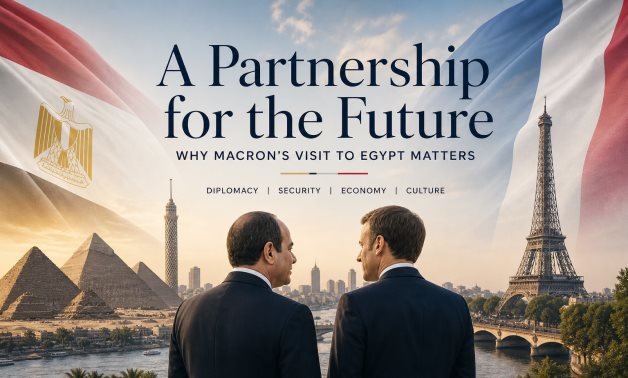
Egypt and France are entering a deeper strategic partnership at a critical regional moment.




CAIRO - 8 MAY 2026
As French President Emmanuel Macron prepares to visit Cairo, Egypt and France find themselves deepening a strategic partnership shaped by regional instability, Mediterranean security, defense cooperation, and expanding economic ties.



When French President Emmanuel Macron arrives in Egypt, the visit is rarely treated as routine diplomacy.
This time is no different.
Macron’s upcoming trip to Cairo comes at a moment of exceptional regional turbulence, with wars reshaping the Middle East, global economic uncertainty weighing heavily on international markets, and strategic alliances being tested across multiple fronts.
Against that backdrop, the visit carries significance far beyond ceremonial meetings or bilateral agreements.
For Egypt and France, the relationship has evolved over the past decade into one of the Mediterranean’s most important strategic partnerships, spanning defense, energy, trade, infrastructure, culture, and regional diplomacy.
What began as strong political coordination gradually expanded into a multidimensional alliance, one that now touches nearly every major file shaping the future of the region.
And as Paris increasingly looks toward the Eastern Mediterranean and North Africa as areas of strategic priority, Egypt has emerged as one of France’s most reliable and influential partners.
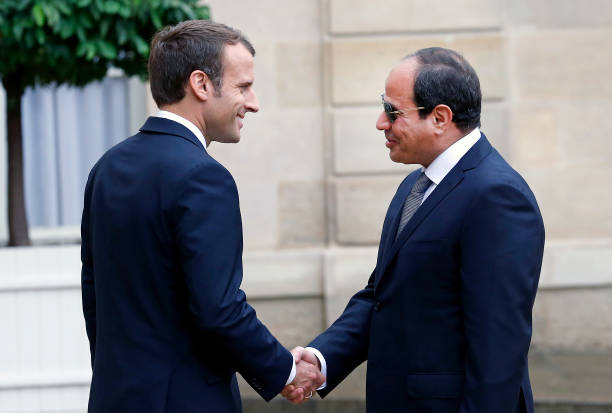
At first glance, Macron’s visit may appear centered around familiar diplomatic themes: regional stability, economic cooperation, Gaza, Libya, Sudan, migration, and energy security.
But beneath those headlines lies something deeper.
France sees Egypt not simply as another regional ally, but as a state whose geographic position, demographic scale, military weight, and political influence make it indispensable in navigating the crises currently shaking the Middle East and the Mediterranean basin.
For Paris, close coordination with Cairo is no longer optional. It is a strategic necessity.
Strategic assessment
From Paris’ perspective, Cairo occupies a unique position.
It controls one of the world’s most critical maritime corridors through the Suez Canal. It borders Gaza, Libya, and Sudan simultaneously. It plays a central mediating role in Palestinian affairs. It possesses one of the region’s strongest military establishments.
And perhaps most importantly for Europe, it remains a pillar of stability in a region increasingly defined by fragmentation.
Egyptian-French relations did not suddenly deepen overnight. The current phase of cooperation is the result of years of gradual expansion across multiple sectors.
Politically, the relationship strengthened through regular coordination on regional crises, particularly in Libya, Lebanon, Gaza, and the Eastern Mediterranean.
Economically, France became one of the largest European investors in Egypt, with major French companies playing central roles in transportation, energy, infrastructure, and urban development projects.
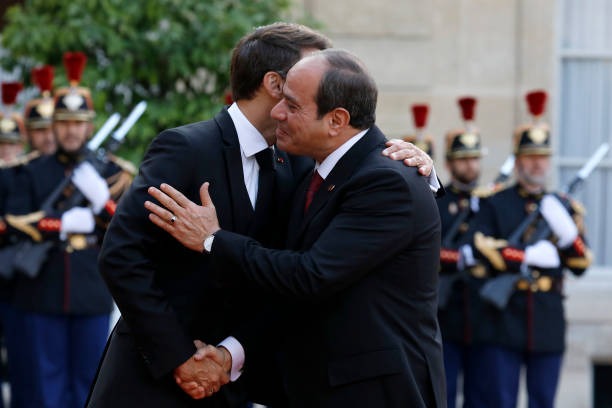
Strategic cooperation between Cairo and Paris now spans multiple critical sectors.
One of the clearest indicators of the depth of Egyptian-French relations has been defense cooperation.
Over the past decade, Egypt has become one of France’s key defense partners in the region.
The relationship expanded significantly following major defense agreements involving Rafale fighter jets, naval frigates, Mistral helicopter carriers, and advanced military systems and training cooperation.
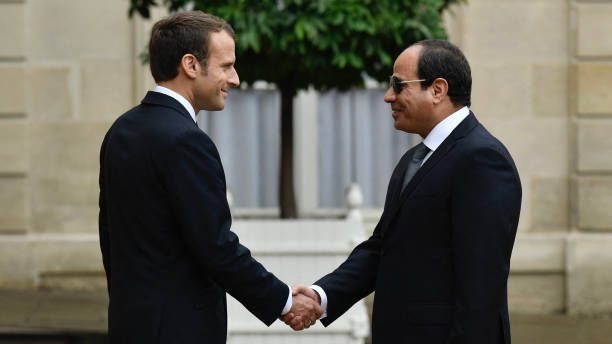
But defense cooperation extends beyond arms deals.
The two countries regularly coordinate on counterterrorism, maritime security, Mediterranean stability, intelligence cooperation, and border security challenges.
Macron’s visit comes while the Middle East remains consumed by overlapping crises.
The war in Gaza continues to dominate regional diplomacy, while tensions involving Iran, Lebanon, and the Red Sea have dramatically increased geopolitical risks.
In nearly all these files, Egypt has positioned itself as a central diplomatic actor.
Cairo has played a leading role in ceasefire mediation efforts, humanitarian aid coordination, negotiations involving detainees and crossings, and broader regional de-escalation diplomacy.
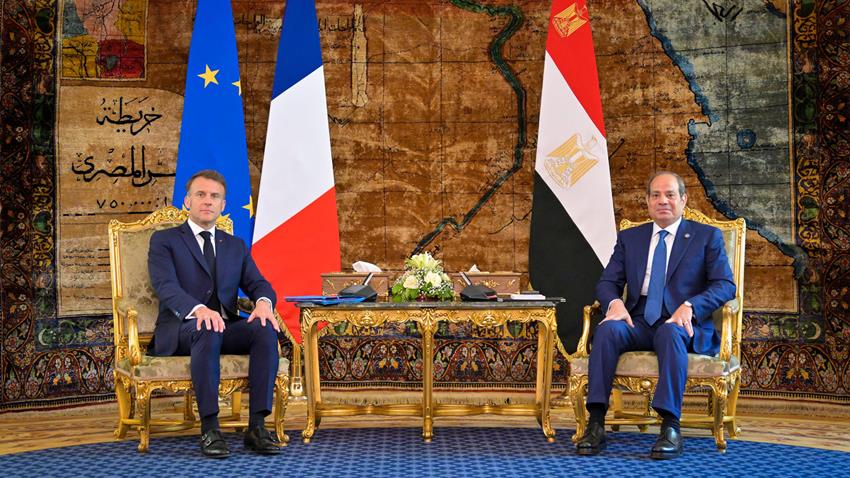
France, meanwhile, has sought a larger diplomatic role in the region, particularly as Europe attempts to avoid a wider regional spillover.
This creates strong overlap between Egyptian and French priorities.
Timing matters in diplomacy.
Macron’s arrival in Cairo comes during one of the most volatile periods the region has seen in years. Wars are reshaping alliances. Global trade routes face mounting threats. Economic uncertainty continues to pressure governments worldwide. Europe itself is reassessing its strategic priorities south of the Mediterranean.
In that environment, Egypt’s importance rises significantly.
Egypt provides strategic coordination on Mediterranean security, regional diplomacy, and economic opportunities.
France provides political support within Europe, expanded investment opportunities, and deeper defense and technology cooperation.
The visit, therefore, is not simply symbolic.
It reflects the reality that Egyptian-French relations are entering a more strategic and interconnected phase, shaped not only by bilateral interests, but by the rapidly changing geopolitical landscape surrounding both countries.
Macron’s visit ultimately reflects a broader geopolitical reality: in an increasingly unstable Mediterranean and Middle East, both Cairo and Paris see each other as long-term strategic partners in a region where stable alliances are becoming increasingly rare.

Be Social




Comments
Leave a Comment