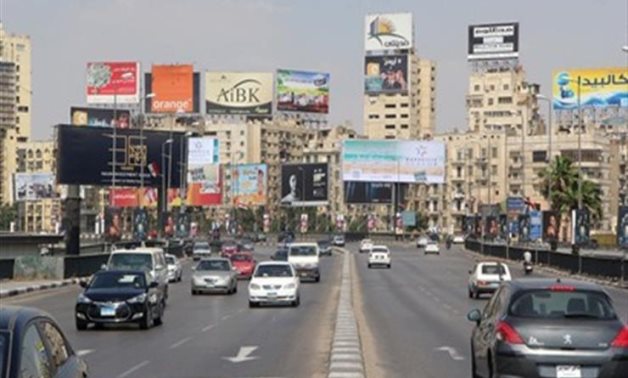
A file photo of traffic flow in Giza, Egypt.




CAIRO – 30 April 2026: Egypt on Thursday approved new regulations governing the use of lighting in roadside advertising systems, including operating hours, light intensity, and efficiency standards.
Prime Minister Mostafa Madbouly approved the new guidelines, which restrict the use of advertising illumination during daylight and overnight hours, while allowing limited lighting during peak evening hours.
The decision eases a previous Cabinet directive issued in March ordering the shutdown of illuminated outdoor advertisements amid an energy crisis linked to regional supply disruptions.
According to the national authority for regulating outdoor advertising, the updated framework is designed to achieve a balance between rationalising consumption and supporting investment and continued economic activity, while avoiding harm to workers in the advertising sector.
Operational Hours, Light Intensity
Under the new rules, all forms of advertising lighting are prohibited during daylight hours from 7:00 a.m. to 5:00 p.m., including spotlights, backlit systems, illuminated advertising units (MUPIs/City Lights), and any other integrated lighting components.
An exception is made for installations equipped with light sensors and automated dimming systems capable of adjusting brightness according to ambient conditions.
These systems must ensure automatic control without manual intervention and reduce brightness levels to no more than 50% of operating capacity with maximum thresholds set at 4% instead of 8% at night, and 37.5% instead of 75% during the day.
Night-time operation is also restricted.
Advertising lighting is not permitted on main roads between 12:00 a.m. and 5:00 a.m., according to the guidelines.
The same applies to internal roads, with the exception of advertisements located within tourist areas or those granted explicit Cabinet approval. This includes billboards, digital displays, storefront lighting, and other illuminated advertising elements.
The guidelines further stipulate that advertising illumination should be used only during periods where it serves its intended purpose, avoiding unnecessary continuous operation.
Light Efficiency Standards
Visibility during daylight hours should rely primarily on design and materials rather than artificial lighting, and where possible, systems should be linked to automated or timed controls to ensure compliance, according to the regulations.
In addition, all lighting units used in billboards must rely on fixed lighting or high-efficiency LED technology. This maximizes brightness and minimizes energy consumption, while ensuring a long operational lifespan and reduced maintenance and replacement costs.
LED pixel and display components used in electronic advertising screens must also meet high luminous efficiency standards.
Cooling systems for advertising installations, including fans, air conditioning units, ventilation systems, and dust and humidity filters, are also required to meet energy efficiency requirements to reduce long-term electricity consumption.
Egypt has introduced a set of energy-saving measures, including reduced street lighting and a partial remote-working arrangement, in response to energy supply disruptions resulting from the war in Iran and escalating tensions in the Middle East.
Meanwhile, the government has scrapped an earlier measure requiring the early closure of shops, malls, and restaurants, restoring normal operating hours nationwide following a meeting of the Central Crisis Management Committee on Sunday.

Be Social




Comments
Leave a Comment