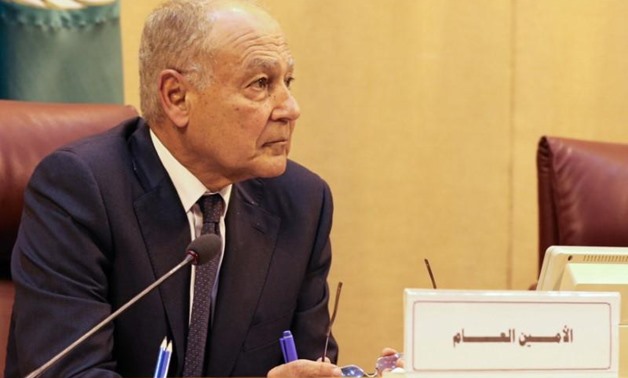




CAIRO – 28 April 2026: Arab League Secretary-General Ahmed Aboul Gheit affirmed that the Middle East is experiencing a period of extreme tension, with Arab states bearing a significant share of the repercussions despite their concerted efforts to avoid regional conflict.
In an address to the UN Security Council session on the Middle East, Aboul Gheit pointed out that the recent exchange of attacks should not distract from the fundamental cause of instability: the continued Israeli occupation of Palestinian and Arab territories.
Aboul Gheit accused Israel of pursuing a policy of “permanent war” through expanding military operations and settlement activities, stressing that these policies undermine the prospects for peace and lead to further escalation.
He explained that the situation in Gaza reflects a profound humanitarian and political crisis, as over two million Palestinians continue to suffer amid stalled reconstruction efforts and the lack of implementation of international agreements.
The Secretary-General reiterated the Arab League’s unwavering support for the two-state solution as the essential path to peace, warning that current policies are making this solution increasingly unattainable.
He also emphasized the critical importance of supporting UNRWA as the primary provider of humanitarian services in Gaza, calling for its protection against attempts to undermine its role.
Addressing the situation in Lebanon, Aboul Gheit welcomed the ceasefire declaration and affirmed the Arab League's support for the Lebanese government's efforts to regain sovereignty over decisions of war and peace. He emphasized the necessity of a complete Israeli withdrawal from Lebanese territory to facilitate the return of displaced persons and the restoration of regional stability.
Aboul Gheit concluded his remarks by affirming that true security is achieved through justice and coexistence rather than military force. He called on the Security Council to play a more effective role in securing a just and comprehensive settlement to end the cycle of conflict and open a new horizon for stability in the region.

Be Social




Comments
Leave a Comment