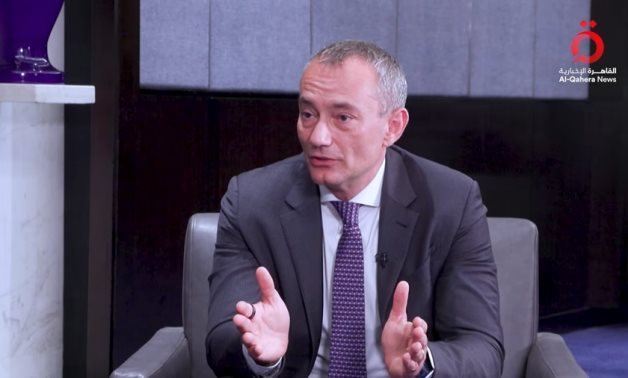




CAIRO – 18 April 2026: High Representative for Gaza Nickolay Mladenov spoke about “sensitive” discussions in Cairo to ensure the full implementation of US President Donald Trump’s 20-point plan for Gaza in an interview with Al-Qahera News, posted on Friday.
Mladenov said Egypt’s hosting of the talks provides reassurance to all parties that the process will be handled with a strong degree of common sense and due regard for the difficulties involved.
Mladenov said that highly sensitive discussions are currently underway on how to ensure full implementation of the plan, requiring considerable time and the utmost seriousness.
The talks, he said, address core issues at the heart of the Gaza crisis, including a smooth transition between the current administration and the National Committee for the Administration of Gaza (NCAG).
Discussions also cover the delivery of aid and reconstruction across Gaza without fragmentation, and the withdrawal of Israeli forces to the perimeter of the enclave.
He also pointed to efforts to prevent internal clashes between factions and to ensure the committee’s ability to manage Gaza effectively across both security and administrative levels.
CNN reported that the United States and Hamas held on Tuesday their first direct talks since the Gaza ceasefire, with the aim of reaching an agreement on the next phase of the truce reached in October last year.
The ceasefire is based on a multi-phase peace plan put forward by US President Donald Trump and endorsed by the UN Security Council, following intensive mediation by Egypt and Qatar.
Two years of unrelenting Israeli strikes in Gaza have killed over 70,000 Palestinians, devastated homes and infrastructure, and pushed the enclave toward the brink of famine amid Israeli restrictions on aid deliveries.
What Egypt Brings to the Table
During the interview Mladenov said Egypt’s contribution to the negotiations is built on several key strengths.
He noted first its ability to communicate with all parties involved, including Palestinians, Israelis, regional actors, and both the United States and Europe, describing this as a crucial asset.
He also highlighted Egypt’s detailed understanding of the situation on the ground, as well as its capacity to support efforts related to essential steps that must be implemented in practice.
This, he said, goes beyond facilitating movement through the Rafah crossing and extends to preparing a Palestinian police force and developing the necessary mechanisms and expertise for reconstruction in Gaza.
Implementing Gaza Plan
Mladenov said mediators are currently needed to ensure that all ceasefire-related commitments are fully activated.
These include the opening of the Rafah crossing, increasing the flow of aid, halting military operations that have disrupted many aspects of life in Gaza, and allowing the removal of rubble, he said.
Mladenov described as a positive sign the existence of significant pledges from members of the Board of Peace and supporting countries, led by the United States, as well as Gulf states and Egypt, among others, to provide substantial funding for Gaza.
However, he stressed that translating these commitments into real assistance for people requires the establishment and implementation of the necessary mechanisms.
Mladenov highlighted the collaborative efforts involving Egypt, mediating countries, and the Palestinians in Gaza to establish a transitional administration and create the conditions for the withdrawal of Israeli forces.
Future of Gaza
Meanwhile, he said that the current priority is to implement what has been agreed upon regarding the immediate delivery of aid and emergency relief to the people of Gaza.
Mladenov underlined the urgent need to bring in large numbers of temporary shelters to Gaza so that people can live with at least a measure of dignity and protection.
He highlighted the need to address the shortage of basic food supplies and medicines, the collapse of the healthcare system, and the plight of children who have been out of school for extended periods.
Mladenov pointed to projects that were already launched in Gaza over the past year, in partnership with the United Nations and other organizations, affirming that these initiatives require financial support.
He added that it is essential to give people a sense of hope that, even as political discussions about Gaza’s future continue, there can be some, albeit limited, improvement in their daily lives and ability to survive.
Transition of Power to PA
Mladenov emphasized that the ultimate goal of NCAG in cooperation with the mediators remains the reunification of Gaza with the rest of the occupied Palestinian territories under the Palestinian Authority.
Mladenov said he believes the Palestinian Authority will have a greater role going forward, describing this as a realistic outcome.
He added that, regardless of rumors or conspiracy theories, this is the direction the process is moving in and represents the ultimate goal.
Mladenov stressed that NCAG is not a government for Gaza, nor is it a substitute for the legitimate Palestinian Authority or an instrument of the Board of Peace to govern Gaza.
Rather, the committee is composed of Gaza’s own people to manage this transitional phase in Palestinian history, paving the way for its reunification with the legitimate Palestinian Authority in Ramallah, he added.
Meanwhile, he cited challenges facing NCAG, including the Israeli forces' continued presence inside Gaza, with over half the territory under their control, fragmenting the enclave.
For NCAG to operate effectively, it must be able to function across all parts of Gaza, from north to south and east to west, Mladenov said.

Be Social




Comments
Leave a Comment