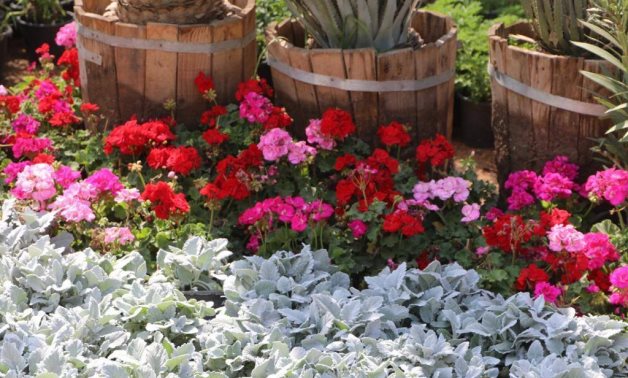
partial opening of 93rd Spring Flower Exhibition




CAIRO - 13 April 2026: As Egypt prepares to celebrate Sham El-Nessim, historians and archaeologists highlight that this spring festival is not merely a modern tradition but a profound legacy inherited from Ancient Egyptians thousands of years ago. Known originally as "Shamo" (the season of harvest), the festival represents the renewal of life and the flourishing of nature.
Salah Al-Masekh, Director of Karnak Temples, explained that Ancient Egyptians were the "Kings of Celebration." For them, the spring equinox marked a national holiday dedicated to nature and agriculture.
It was a time for joy, communal singing, and grand processions where noblewomen joined in with harps and dances to welcome the "new birth" of the year.
The traditional foods consumed during Sham El-Nessim hold deep symbolic meanings rooted in ancient beliefs:
Salted Fish: Ancient Egypt was abundant in fish, such as mullet and tilapia. Texts from that era describe fish being "more numerous than the sands on the beach." Drying and salting fish was a sophisticated preservation method recorded on temple walls.
Eggs (Suhet): The egg symbolized the beginning of creation and rebirth. Coloring eggs was a ritual to celebrate the renewal of life.
Onions: Linked to legendary tales of healing, onions were believed to ward off diseases. One legend tells of a young prince cured by inhaling onions on the morning of the spring festival.
Lettuce and Green Chickpeas (Malana): Lettuce was associated with Min, the god of fertility, while green chickpeas symbolized the peak of the harvest season.
Archaeological expert Al-Tayeb Gharib noted that the Pharaohs left nothing to chance. Their celebrations, fishing techniques, and banquets are meticulously documented on the walls of tombs and temples.
From the Nile banks to the lakes of Fayoum, the abundance of fish and the joy of the harvest were central to the Egyptian identity.
On Monday, thousands of years later, Egyptian families continue to flock to parks and the Nile banks, practicing the same rituals as their ancestors—proving that the spirit of the Pharaohs remains vibrant in every salted fish and colored egg shared under the spring sun.

Be Social




Comments
Leave a Comment