CAIRO - 7 April 2026: Today, Obour breathes clean air, and tomorrow Egypt will reap the rewards of transforming an environmental burden into a sustainable economic asset.
The Egyptian state has proven that the well-being of its citizens begins with a clean environment and a green future. In a historic step reflecting the Egyptian state's commitment to protecting the environmental rights of its citizens, Dr. Manal Awad, Minister of Local Development and Environment, brought an end to decades of environmental suffering for the residents of Obour and New Obour cities by announcing the official and final closure of the Obour landfill, which had long been a source of complaints and pollution.
The closure decision was not merely an administrative procedure; it marked the beginning of a dramatic transformation, turning mounds of waste into green lungs and smart investments.
This coincides with the operation of the integrated complex, the largest in the Middle East, officially ushering Egypt into the era of integrated waste management. In this new era, there is no place for open burning or haphazard disposal; it open doors for clean energy, organic fertilizers, and job opportunities for young people.
Goodbye to the foul odours: Obour breathes a sigh of relief
From the heart of the new Obour site, in front of vast areas that until recently received waste from the Cairo and Qalyubia governorates, Dr. Manal Awad stood to emphasize that the health of citizens is a red line and a top priority that cannot be postponed.
This came during a field visit on Sunday that saw the participation of leaders from the Waste Management Regulatory Authority and the New Obour City Authority.
The Obour landfill is permanently closed
In her field visit, Dr. Manal Awad did not only target inspection, but also the launch of the environmental rescue plan. Urgent measures began with the closure of all entrances and the prevention of any new waste shipments starting April 1, 2026.
Strict security measures were also put in place to stop scavengers and lawbreakers from causing random fires. This marked the beginning of the final chapter in the suffering of Obour's residents from the emissions and foul odors that plagued their sleep.
300 acres of waste transformed into 170 acres of investment
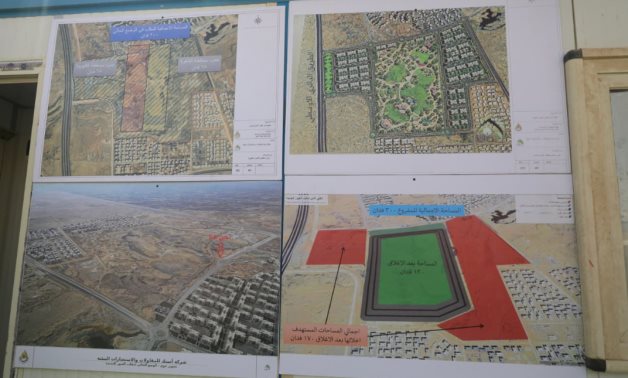
The plan unveiled by Minister Manal Awad includes an environmental engineering component, reducing the current landfill area from 300 acres to just 130 acres through development and efficiency improvements. These improvements will rely on scientific burial practices and state-of-the-art covering methods.
The biggest surprise, however, was the allocation of the remaining 170 acres for investment opportunities, transforming them into a green park that will give the area a modern, aesthetically pleasing appearance.
The Tenth of Ramadan Waste Complex
Because closures necessitate a sustainable alternative, Awad visited the Tenth of Ramadan City to inspect the integrated waste treatment complex, the cornerstone of the new system.
On an area exceeding 1,200 acres and funded by the World Bank, the largest environmental complex in the region is being constructed. This complex comprises several giant factories capable of processing 15,000 tons of waste daily, equivalent to half of Greater Cairo's total waste.
The Minister inspected a private sector factory built on 50 acres, operating at a capacity of 7,000 tons per day. The factory transforms waste into organic fertilizer and refuse-derived fuel (RDF), which supplies cement and glass factories, fully realizing the concept of a "circular economy."
Investments of $50 Million and 3.5K Job Opportunities
The integrated project in the 10th of Ramadan City boasts promising figures regarding emissions reductions and a 30 percent decrease in greenhouse gases, equivalent to 1.25 million tons of carbon dioxide.
It also includes a solar energy system, massive water reservoirs, and a wastewater treatment unit, making it the first "self-operating" facility in Egypt.
Regarding operation, the project will provide 3,500 direct and indirect job opportunities, along with training for 1,500 specialized personnel. Furthermore, it will contribute to sustainability and attract investments exceeding $50 million upon full operation through a public-private partnership (DBFO) model.
Smart Management and Partnership with the Private Sector
Dr. Manal Awad emphasized that the Egyptian state will not manage this file alone, out of belief in the effectiveness of private sector's participation. She confirmed that the implementation rate has exceeded 80 percent in the complex's infrastructure, announcing the start of operations for the first cell of the sanitary landfill this April, and the trial operation of the treatment plants next May.
The Minister reassured citizens that the new system aims not only to dispose of waste, but also to improve air quality and reduce waste fire rates by 10 percent immediately upon operation, which will directly impact public health and the civilized image of Egypt 2030.
It is worth noting that closing the Obour landfill and opening the Tenth of Ramadan City complex come as the onset of a green revolution led by the Ministry of Local Development and Environment with direct political guidance.







Comments
Leave a Comment