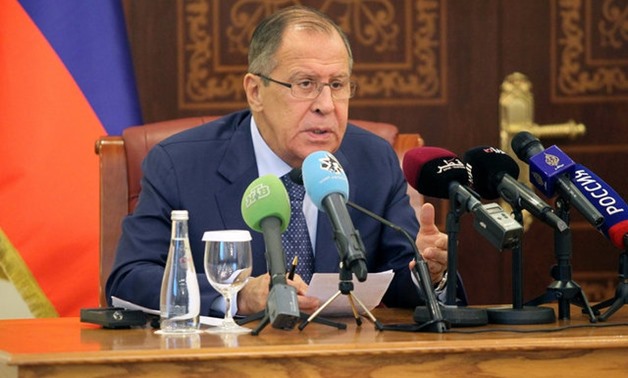




CAIRO – 3 April 2026: Russian Foreign Minister Sergey Lavrov has affirmed that Russia and Egypt are calling for an immediate cessation of hostilities in the Middle East and a return to diplomatic channels.
During a joint press conference in Moscow, Lavrov and his Egyptian counterpart, Badr Abdelatty, emphasized their continued coordination at the United Nations regarding regional escalations.
Stressing Russia’s commitment to regional security, Lavrov highlighted the necessity of ensuring freedom of navigation in the Strait of Hormuz. He noted a strong convergence between Egyptian and Russian views on Middle Eastern issues, which he described as a cornerstone for regional stability.
Lavrov expressed Moscow's deep appreciation for Egypt’s mediation efforts and its role in resolving crises. He specifically commended Cairo’s work in de-escalating tensions and confirmed that joint coordination would continue regarding developments in regional conflicts.
The Russian official also emphasized that Moscow is paying close attention to expanding cooperation in agriculture and energy. The talks highlighted the strategic importance of Russian agricultural exports and energy resources to the Egyptian market.
Additionally, Lavrov expressed concern over the evolving conditions in the West Bank. He criticized the expansion of settlements and the tightening of administrative and legal control, noting that such actions undermine the prospects for peace.
He reiterated that there is no alternative to a solution based on international law, affirming that a two-state solution remains the only viable path to lasting stability. Lavrov also called for the maintenance of the ceasefire in Gaza—achieved largely through significant Egyptian efforts—to prevent the conflict from widening further.
Regarding the political division in Libya, Lavrov said that the current instability dates back to the 2011 intervention. He emphasized the necessity of a United Nations-led settlement that accounts for the interests of all domestic parties.
Finally, the ministers called for a political and diplomatic resolution to the Iranian crisis, warning of the severe repercussions should the conflict continue to expand. Both sides reaffirmed that settlement activity in the West Bank remains a primary obstacle to a just and lasting peace in the region.

Be Social




Comments
Leave a Comment