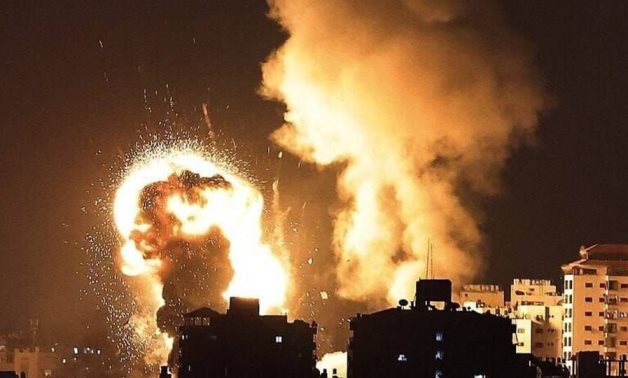
Israeli bombings continue in Gaza, leaving thousands of deaths and injuries among civilians.
CAIRO - 1 April 2026: The UN Human Rights Office has expressed concern over the increasing evictions of Palestinian families from their homes in the areas surrounding the Old City of Jerusalem, and the growing violations across Palestine amid the escalating tensions in the Middle East.
According to the UN Human Rights Office, many Palestinians are being evicted because Israeli authorities claim they lack building permits in East Jerusalem and many other parts of the West Bank. However, obtaining these permits is virtually impossible for Palestinians, leading to their eviction.
Ajith Sunghay, the UN Human Rights Office representative in the occupied Palestinian territory, stated that while evictions have been ongoing for many years, they have recently escalated significantly.
In March, Israeli authorities forcibly evicted at least 16 Palestinian families from their homes in Silwan, occupied East Jerusalem, in the latest episode of an alarming acceleration of Israeli efforts to displace Palestinians from the areas surrounding the Old City and replace them with settlers.
Sunghay added: “Recently, since the regional escalation involving Iran, Israel, and the United States, we have witnessed widespread activities including the eviction of Palestinians and the demolition of homes in East Jerusalem in general, and specifically in the Old City, and extending to the rest of the West Bank.”
The UN official emphasized that, considering the broader displacement that occurred in the West Bank, including East Jerusalem, last year, and referring back to the report recently issued, there are nearly 36,000 people forcibly displaced.
This includes the three camps in the northern West Bank and approximately 4,000 people in other parts of the West Bank, including East Jerusalem. Sunghay explained that this is a huge number compared to what has happened since 1967 and during 1967.
Human rights violations on the occupied territories
The UN official pointed to the significant increase in human rights violations in both Gaza and the West Bank, noting that this is not only related to settler violence, but to a range of other issues.
Whether it's restrictions on movement, settler violence, or attacks by the Israeli army, the list of violations includes raids, arrests, detention, ill-treatment, and torture.
Sunghay expressed concern about the continued killings, noting that nearly 700 Palestinians have been killed since the first phase of the ceasefire was declared.
He also highlighted the ongoing humanitarian challenges, including limited access to aid, food shortages, lack of employment opportunities, and inadequate shelter. He stated that settler violence is escalating, being documented hourly, and that it now includes coordinated attacks carried out through social media with impunity.
The UN official also addressed the humanitarian situation in the occupied Palestinian territory, where reconstruction in Gaza has yet to begin, with many relief supplies being blocked under the pretext that they are dual-use items.
He stressed that when this situation persists, people will die from bullets and shelling, or from lack of medicine, disease, or starvation. He called on the international community to take urgent action and not merely issue statements and reports.








Comments
Leave a Comment