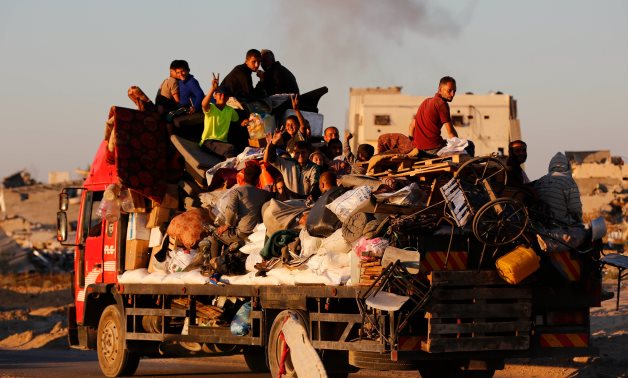




CAIRO – 12 March 2026: As the humanitarian crisis in the Gaza Strip worsens under continued aid restrictions, the United Nations has escalated its warnings regarding the thousands of patients and wounded individuals whose lives are at risk. With medical evacuations suspended and the delivery of essential relief supplies severely hampered, UN agencies report that the health system is facing unprecedented challenges
UN officials confirmed that the continued closure of key crossings and the obstruction of humanitarian operations are exacerbating the population's suffering. International reports describe living conditions in the Strip as "dire," calling for urgent intervention to ensure the unimpeded delivery of life-saving aid.
The Office for the Coordination of Humanitarian Affairs (OCHA) warned that the undermining of humanitarian logistics is a critical threat. Specifically, the continued closure of the Zikim crossing has forced aid workers to reroute vital supplies intended for northern Gaza through the southern Kerem Shalom crossing. OCHA explained that this alternative route is significantly slower and more expensive, delaying the arrival of urgent relief.
OCHA reported that medical evacuations and the return of Palestinians from abroad remain suspended. The agency issued an urgent call to expand humanitarian operations and provide immediate assistance to those in need.
UN Spokesperson Stéphane Dujarric emphasized that the obstruction of aid is not only limiting the delivery of essential supplies but also hindering the rotation of international staff. He stressed that safe, sustained, and unimpeded access is vital for the UN and its partners to carry out their life-saving missions.
"More crossings must be opened for the movement of goods and people," Dujarric stated, adding that the entry of vital supplies must be facilitated to ensure a rapid and effective response.
Dujarric also noted that while humanitarian organizations have conducted approximately 70 explosive hazard assessments to support debris management, the daily reality for displaced people remains harrowing. A recent assessment of displacement sites revealed that only 11% of nearly 1,000 surveyed locations have shared lighting. Even more concerning, open sewage was found in more than half of the sites, posing a severe public health risk.
Regarding the situation in the West Bank, Dujarric stated: “We continue to follow the current situation in the occupied West Bank with grave concern, including settler activities.”
The UN official warned that the violence is escalating, highlighting the grave dangers faced by Palestinians in the region.
According to the UN, the continued closure of checkpoints throughout the West Bank is undermining Palestinians' access to services and workplaces, as well as the movement of emergency and humanitarian teams.
The Director-General of the World Health Organization (WHO), Dr. Tedros Adhanom Ghebreyesus, confirmed that ambulances in the West Bank are taking longer to reach patients because they are forced to take longer routes and search for more accessible checkpoints.

Be Social




Comments
Leave a Comment