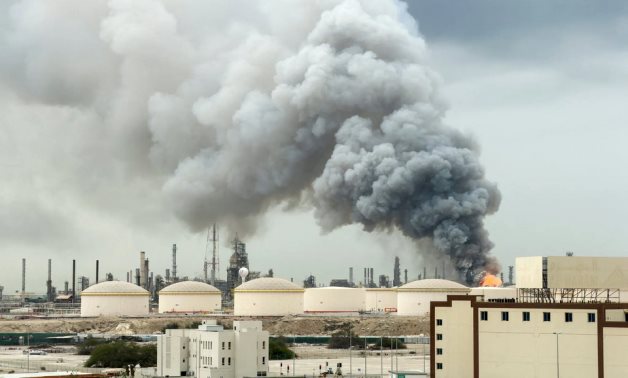
Egypt monitors regional escalation closely as it coordinates diplomacy and economic measures to shield markets and keep supplies steady.




CAIRO - MARCH 2026: The recent military escalation in the region, which started already heavy, is being tracked in Cairo as more than a headline or a crisis. Officials describe it as a direct stress test for international security, with a focus on effects that can spread quickly, from energy markets and trade lanes to the operating space of armed groups and the stability of states, which are already under economic strain.
In recent remarks, Egypt's President Abdel Fattah El-Sisi warned that the conflict carries risks beyond the region and could threaten global order, linking escalation to disruptions in supply chains and transport, and to sharp moves in energy prices.
Expanding tensions, regional wars on horizon:
Regional wars tend to widen in two ways. Sometimes they widen geographically, when strikes and retaliation spread to more territories. Other times they widen functionally, when the conflict begins to hit aviation corridors, shipping routes, fuel supplies, and financial flows.
This is already visible in market volatility. Reuters reporting this month linked the conflict environment to rising energy costs, higher freight and insurance charges, and financial pressure on economies in the region.
For international security, the concern is that “pressure-point escalation” is harder to contain. It can ripple across borders without a formal declaration of war, moreover, it can draw in new actors through indirect means.
Security watch, armed groups, proxies on alert:
Observers often watch escalation periods for a familiar pattern, when states are consumed by high level confrontation, armed groups find openings and the chance to surface.
The mechanism is practical; attention shifts to strategic targets, border environments tighten unevenly, and weapons and funding networks become more active. The longer a region stays in crisis mode, the more room armed groups have to recruit, move, and attempt to frame themselves as defenders or spoilers, depending on the audience they are targeting.
This is one reason regional escalation is treated in Cairo as a threat to “international stability,” not simply a bilateral military contest.
Arms race, confidence collapses:
Another risk factor is procurement, because regional crises can quickly become an arms race logic. Governments that fear vulnerability tend to invest more in air defense, drones, missiles, cyber capabilities, and surveillance systems. The more crowded the deterrence environment becomes, the higher the chance of miscalculation, and the harder it becomes for diplomacy to regain traction.
Egyptian officials have signaled that the region is entering a period where collective security arrangements are again being discussed. Ahram Online reported that Foreign Minister Badr Abdelatty said Egypt is working with Arab partners on reviving proposals for a joint Arab military force, against the background of escalating regional tensions.
Crises become credibility tests:
When a regional conflict touches energy routes, shipping lanes, and strategic bases, it tends to become a credibility issue for global powers. That raises the stakes in international forums and complicates diplomacy, because actors begin negotiating not only outcomes, but reputations and deterrence narratives.
This is the layer Cairo keeps pointing to, that escalation can deepen rivalry between major powers and reduce space for compromise, exactly when compromise is most needed.
What Egypt is doing; diplomacy, citizens, and economic shock absorption:
Egypt’s response is being presented through three connected tracks: de-escalation diplomacy, citizen protection, and economic resilience.
1) De-escalation diplomacy, keeping channels open and pushing containment
Egypt has been intensifying political contacts with regional and international partners, framing its position around de-escalation and the need to prevent spillover.
The presidency said El-Sisi raised deep concern about the war’s repercussions in a call with France’s President Emmanuel Macron, specifically citing the impact on energy prices, supply chains, and air and maritime transport.
Egypt has also continued coordinating with partners on broader regional files linked to escalation. This includes keeping the Gaza ceasefire track alive, as part of limiting regional blowback, and maintaining a political horizon as tensions rise.
Official Egyptian presidency material from October 2025 described the Sharm El-Sheikh summit framework that supported ending the Gaza war’s first phase and emphasized the mediating role of Egypt alongside the United States, Qatar, and Türkiye.
The message from Cairo is consistent: any regional escalation becomes harder to stop when political tracks collapse, and when humanitarian pressure rises.
2) Protecting Egyptians abroad, 24/7 consular operations and evacuation coordination
A second track is citizen protection. With airspace disruptions and sudden security shifts, Cairo has moved to a round-the-clock consular posture.
In March 2026, Egyptian media reported that Abdelatty has been holding daily follow-ups with the consular sector and Egypt’s ambassadors and consuls in the Gulf, Jordan, and Iraq, instructing missions to work around the clock, run hotlines, and assist citizens, including the injured, while monitoring evacuation arrangements.
The ministry also publicly thanked Saudi Arabia, Oman, and Jordan for facilitating evacuation routes via their territories for Egyptians stranded in neighboring states, according to the same reporting.
This matters for international stability because large-scale civilian disruption, stranded travelers, and evacuation bottlenecks can quickly become political flashpoints and humanitarian problems.
3) Economic shock absorption, daily monitoring, energy hedging, and temporary measures
The third track is economic. Egypt is treating market turbulence as a national security issue.
State Information Service reporting said Prime Minister Mostafa Madbouly ordered daily monitoring of global market developments, particularly energy prices and international capital flows, alongside a package of temporary, preemptive measures designed to protect local market stability and ensure energy supply continuity.
Reuters also reported that Egypt raised domestic fuel prices amid global energy turmoil, connecting the move to wider energy instability and reform pressures, while describing the situation as an exceptional period driven by regional developments.
This economic track includes:
- Closer daily management of supply contracts and delivery schedules
- Using hedging and contractual arrangements to limit part of the global price shock
- Accelerating external financing tranches where possible
- Tightening public spending priorities and energy consumption in government bodies
From Cairo’s perspective, the point is not that Egypt can end the crisis alone. The point is that Egypt sits at an intersection where regional escalation quickly becomes global impact, via energy markets, trade corridors, and political stability.
That is the model Egypt is trying to project; contain the conflict’s spillover, even while the conflict itself remains unresolved.

Be Social




Comments
Leave a Comment