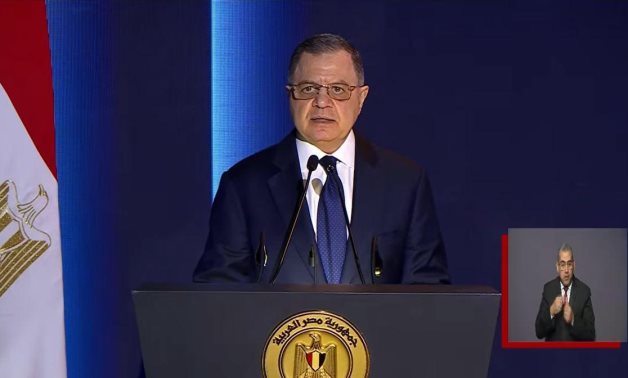
Egypt marks Police Day, commemorating Ismailia 1952 and honoring the police role in safeguarding national stability.




CAIRO 24 JANUARY 2026: Egypt’s Interior Minister, Major General Mahmoud Tawfik, has reaffirmed that the Battle of Ismailia will remain an enduring symbol of national struggle and a powerful expression of the historic bond between the police and the Egyptian people, as the country marked the 74th anniversary of Police Day.
Speaking during the official Police Day ceremony, attended by President Abdel Fattah El-Sisi, senior state officials, and members of the police force, Tawfik said the Ismailia anniversary reflects a chapter of patriotic resistance whose meaning has carried through generations, protecting Egypt’s sovereignty and safeguarding the dignity of the nation.
In his address, the minister opened by welcoming President El-Sisi and attendees, describing the Battle of Ismailia as a “glorious” milestone that showcased scenes of solidarity between the police and the public in confronting aggression. He stressed that the episode continues to represent sacrifice and pride, and remains deeply rooted in national memory.
Tawfik framed the commemoration as part of a broader narrative of national resilience, saying Egypt has repeatedly demonstrated its capacity to overcome crises when the nation stands behind its leadership. He pointed to what he described as the consolidation of a “new republic,” built on firm foundations that will not tolerate any compromise of sovereignty or national security.
Against what he described as a turbulent regional environment and an international landscape marked by rising crises and rapid shifts, the interior minister said Egypt’s security strategy has focused on continuous risk monitoring, assessment, and pre-emptive action.
He emphasized that the ministry’s approach is based on scientific planning designed to keep pace with evolving crime patterns, supported by modern technology and proactive operational measures aimed at preserving public safety and protecting national capabilities.
Tawfik placed terrorism at the forefront of security challenges, warning of continued attempts by what he described as the terrorist Muslim Brotherhood to spread rumors, fabricate narratives, and promote false claims of popular support through social media platforms.
He said the Interior Ministry has confronted these efforts through pre-emptive security operations targeting organizational structures and financial networks. According to his remarks, security and intelligence bodies, with what he described as broad public support, thwarted attempts over the past year to revive the group’s armed wing, arrested those involved, and disrupted plans aimed at economic assets and national capabilities.
The minister also said the ministry dealt with media committees and commercial entities used as fronts for financial support, citing an estimated value of roughly 2.9 billion Egyptian pounds linked to those structures. He stressed the ministry’s efforts to counter misinformation, raise public awareness, and expand programs that address what he termed fourth- and fifth-generation warfare tactics targeting states.
The minister also spoke about monitoring extremist organizations that seek to exploit regional conflict zones to expand activity and rebuild capabilities. He said the ministry has adopted precautionary security measures to prevent infiltration into Egypt and to counter recruitment attempts targeting youth online.
He highlighted the importance of confronting extremist ideologies, saying those influenced by such ideas are being enrolled in intellectual rehabilitation and concept-correction programs supervised by religious scholars and specialists in sociology and mental health, to reduce the risk of radicalization and violence.
With organized crime rising in various forms amid regional security spillovers, Tawfik said drug trafficking remains a critical concern. He described intensified efforts to monitor production sources and smuggling routes and to target those responsible with “qualitative” security operations.
The minister cited major seizure figures, saying the value of confiscated narcotics over the year reached approximately 27 billion Egyptian pounds. He also referred to efforts to stop smuggling of synthetic narcotics intended for re-export to other states, saying the estimated value in targeted markets reached 34 billion pounds, alongside money-laundering cases linked to the drug trade exceeding 19 billion pounds.
He stressed coordination and information integration with the armed forces to prevent narcotics from entering Egypt or being produced domestically, describing the issue as a direct threat to society.
The interior minister also emphasized the ministry’s work to combat irregular migration and thwart criminal trafficking networks that exploit weakened border controls in parts of the region.
He said security efforts have intensified at official entry points, including detection of smuggling tactics and trafficking of minors. He added that these actions have received what he described as broad international recognition.
Tawfik said the ministry’s wider objective is to consolidate security stability and implement a “comprehensive security” concept through upgraded tools and modernized mechanisms to address criminal patterns.
He highlighted the use of artificial intelligence technologies in operational command-and-control systems, reporting successes in dismantling criminal hotbeds and organized gangs, confronting cybercrime, and countering offenses harmful to the national economy.
He said annual statistics indicated a continued decline in crime rates, citing a 14.4% reduction this year, attributing the result to investigative efforts as well as positive public engagement in reporting illegal activity through digital channels.
He also cited strong interaction with the ministry’s online platforms, noting that the Interior Ministry’s official page ranked second globally among government accounts in engagement, describing this as evidence of trust and cohesion between the police and citizens.
The minister said the Interior Ministry is also working to enhance public-facing services through expanded fixed and mobile service points in densely populated areas, alongside digital access to services to reduce the need for citizens to visit police facilities.
This, he argued, reflects a broader orientation toward modernization and citizen convenience, ensuring security services remain accessible, responsive, and efficient.
A significant portion of the speech addressed penal reform. Tawfik said Egypt’s correctional institutions are being transformed into centers of rehabilitation and reintegration in line with international standards. He argued that results after six years show higher success rates for rehabilitation programs, strengthening inmates’ capacity to avoid reoffending and supporting reintegration into society at rates he said exceeded expectations.
He also stated that nearly 10,000 inmates have been enabled to continue university and postgraduate studies, while more than 8,000 have been enrolled in literacy programs in coordination with relevant state bodies.
Tawfik said the Egyptian experience has received praise from international organizations for improving detention conditions. He further stated that the United Nations has adopted Egypt’s correction and rehabilitation centers as a model to train UN personnel participating in peacekeeping missions on how to manage correctional facilities in different countries.
In closing, the interior minister addressed police personnel directly, praising their continued readiness and sense of responsibility in protecting public safety. He also paid tribute to those killed in the line of duty from the police and the armed forces, honoring their sacrifices and wishing a speedy recovery to injured personnel.
He concluded by praising President El-Sisi’s leadership, describing it as a model of strategic vision and determination in confronting challenges, preserving sovereignty, and fulfilling the aspirations of the Egyptian people.
Tawfik said the police will remain committed to their oath, maintaining the highest levels of vigilance and preparedness, and standing ready to sacrifice to protect the nation and its achievements.
He ended with a prayer for Egypt’s safety and unity, stressing the importance of national cohesion and continued alignment behind the state’s institutions.

Be Social




Comments
Leave a Comment