
Egypt’s Police Day commemorates the courage of Ismailia 1952 and honors generations who protected national security.




CAIRO - 23 JANUARY 2026: Egypt’s Ministry of Foreign Affairs, Emigration and Egyptian Expatriates has issued a statement of congratulations and high appreciation to President Abdel Fattah El-Sisi, the Egyptian people, the Minister of Interior, and all personnel of the Ministry of Interior, marking the anniversary of Police Day.
In its message, the Foreign Ministry framed Police Day as more than a ceremonial date, describing it as a living national memory that captures the meaning of sacrifice, dignity, and unwavering commitment to the state’s security and stability. The statement linked the commemoration to a defining moment in modern Egyptian history, the 1952 Ismailia battle, portraying it as an enduring symbol of national courage and the firmness of Egyptian will in the face of foreign occupation.
Police Day has long carried strong resonance in Egypt’s public consciousness because it is associated with steadfastness under pressure and the defense of national sovereignty. In the Foreign Ministry’s framing, the occasion is not simply about recognizing an institution, but about honoring the ideals represented by those who wear the uniform, duty, discipline, and readiness to protect the state and society.
The statement emphasized “deep respect and appreciation” for the police and their historic role, placing the commemoration within a broader narrative of national endurance. It highlighted that the legacy of Police Day continues to inspire a shared sense of pride, especially as Egypt faces complex security challenges that demand vigilance, professionalism, and strong institutions.
At the heart of the Foreign Ministry’s message was the remembrance of the Ismailia battle in 1952, a moment widely regarded as one of the most emblematic episodes of resistance in Egypt’s modern era. The statement described the battle as a title of “sacrifice and pride,” a testament to the defense of the homeland, and proof of the strength of Egyptian resolve in protecting the country’s security and dignity.
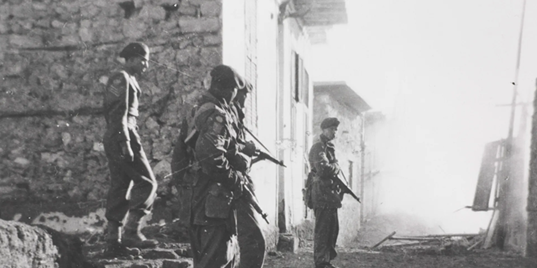
By placing Ismailia at the center of its tribute, the Foreign Ministry reinforced the idea that Police Day is anchored in a historic example of courage under confrontation. The narrative presented the battle as a benchmark for national honor, reflecting a tradition in which Egyptian security institutions are portrayed as a line of defense for sovereignty, public order, and the integrity of the state.
The statement then widened its scope beyond a single historic event, stressing that the sacrifices of police personnel have continued across decades, in parallel with the sacrifices of the armed forces and the broader Egyptian public. This alignment positions Police Day as part of a collective national journey, where state institutions and citizens together bear the burdens of protecting the country and defending its future.
The Foreign Ministry underscored the role of police in strengthening the pillars of security and stability, confronting terrorism, and drying up its sources. This emphasis carries a dual message: acknowledgment of the risks faced by police in the field, and recognition of the strategic importance of internal security in enabling economic progress, social stability, and national development.
A central theme of the statement is that security is not an end in itself, but a prerequisite for growth, modernization, and national transformation. The Foreign Ministry indicated that the efforts of police have contributed to advancing the country’s path of construction, development, and modernization under President El-Sisi.
This framing reflects a broader state narrative: that robust internal security creates the conditions needed for investment, infrastructure expansion, and institutional reform. In this view, the police are not only guardians of law and order, but also key contributors to national momentum, ensuring stability that allows society and the economy to function and progress.
Politically and symbolically, the statement also communicates unity across the state apparatus. When the Foreign Ministry publicly honors the Interior Ministry, it reinforces cohesion among institutions and sends a message that national security, diplomacy, and development are interconnected tracks.
As Egypt marks Police Day, the Foreign Ministry’s tribute aims to elevate the day as a shared national occasion, one that recognizes sacrifice, honors service, and reaffirms confidence in state institutions tasked with safeguarding public security and stability.
Police Day in Egypt, observed annually on 25 January, is rooted in a historic confrontation that became a defining symbol of national dignity. Over time, it evolved from a commemoration tied to a single city and a single clash into a national day that honors the broader role and sacrifices of the police, and reflects a deeper narrative about sovereignty, institutional duty, and collective resilience.
To understand why 25 January holds this significance, one must return to the tense political landscape of the early 1950s, a period shaped by the struggle over foreign presence in the Suez Canal Zone, rising Egyptian nationalism, and mounting friction between Egyptian authorities and British forces stationed in the area.
Following the 1936 Anglo-Egyptian Treaty, Britain retained military privileges in Egypt, including the stationing of troops in the Suez Canal Zone. Over the years, this continued presence became a major point of national contention. By the early 1950s, demands to end foreign military presence grew stronger, driven by political pressure, public sentiment, and a rising conviction that sovereignty must be complete, not partial.
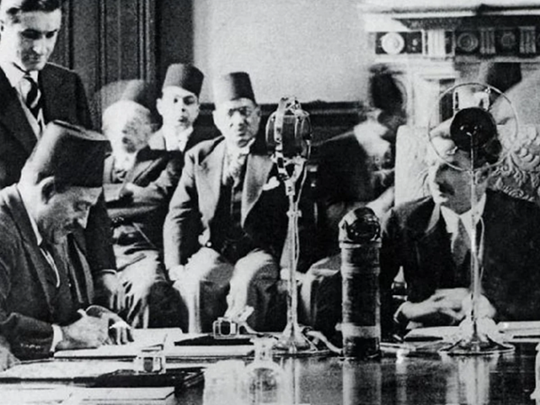
In 1951, the Egyptian government took a significant step by moving to end the treaty framework that had enabled the British presence. That decision intensified tensions in the Canal Zone, particularly in cities like Ismailia, where British forces were heavily positioned. The atmosphere became increasingly volatile as political decisions, street pressures, and security realities collided.
On 25 January 1952, British forces confronted Egyptian police units in Ismailia. The episode is widely remembered as a moment when Egyptian police refused to abandon their positions under pressure, resulting in a deadly confrontation. The police, outgunned and facing overwhelming force, were nevertheless portrayed in the national memory as standing firm in defense of their duty and national dignity.
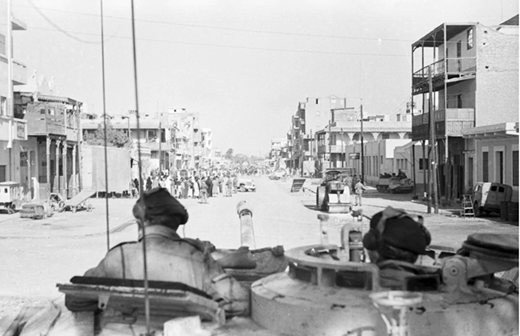
In Egyptian historical consciousness, Ismailia is often cited as a moment of clarity: a confrontation that distilled the broader struggle into a single, unforgettable image of sacrifice. It became emblematic not because it was the only confrontation of its time, but because it crystallized a narrative of steadfastness, one that resonated emotionally and politically across the country.
The event carried symbolic weight beyond its immediate military reality. It spoke to a refusal to surrender sovereignty, and to an institutional identity built on duty, courage, and national pride.
As the years progressed, 25 January became more firmly established as a day of remembrance and honor for the police institution. The origins of Police Day remained closely tied to the Ismailia battle, which was repeatedly referenced in official statements, educational narratives, and public commemorations.
The day became a platform to highlight values associated with policing and state protection:
commitment to dutyloyalty to the homelandsacrifice in serviceprotection of citizens and public order
While the historic root remained Ismailia 1952, the meaning expanded over time to include the cumulative sacrifices of police across decades, particularly as Egypt confronted new security threats and internal challenges that demanded continuous readiness.
As Egypt’s society, economy, and security landscape evolved, so too did the mission of policing. Police Day increasingly came to symbolize not only historic resistance but also modern responsibilities, including:
maintaining public security and stabilitycombating organized crimecountering extremist violence and terrorismprotecting critical infrastructuresupporting emergency response and civil protection
This broader view ties Police Day to a living institutional role. In modern Egyptian state discourse, the police are portrayed as a foundational pillar of stability, enabling schools to operate safely, markets to function, and development projects to proceed without disruption.
One of the most consistent features of Police Day messaging in Egypt is the emphasis on collective sacrifice. Official statements commonly link the police to the armed forces and the wider public, describing security as a shared national project.
This narrative serves an important purpose: it positions internal security not as a separate institutional story, but as part of a wider national arc of resilience. It asserts that the protection of the state and society is achieved through coordinated effort and long-term endurance, and that those who stand on the front lines do so on behalf of an entire nation.
Police Day continues to hold strong symbolic power for three reasons.
First, it is anchored in a specific, emotionally charged historical moment, the Ismailia battle, which is repeatedly framed as a lesson in courage and national pride.
Second, it connects that past to present realities, linking historical sacrifice to modern security challenges and the continued need for stability.
Third, it is tied to a broader state narrative in which stability is portrayed as the prerequisite for development, modernization, and national progress.
In this sense, Police Day becomes a national story about protection and possibility: honoring those who ensure the conditions in which society can build, invest, and move forward.
From Ismailia in 1952 to the challenges of the modern era, Police Day in Egypt has evolved into a commemoration that bridges memory and mission. It is an annual reminder of an institutional identity built on duty and resilience, and a day that places the police within a wider story of national sovereignty, stability, and long-term development.
It remains, in the language of official statements, a “timeless national memory”, one that continues to evoke pride, gratitude, and a reaffirmation of the state’s commitment to security and the protection of its citizens.

Be Social




Comments
Leave a Comment