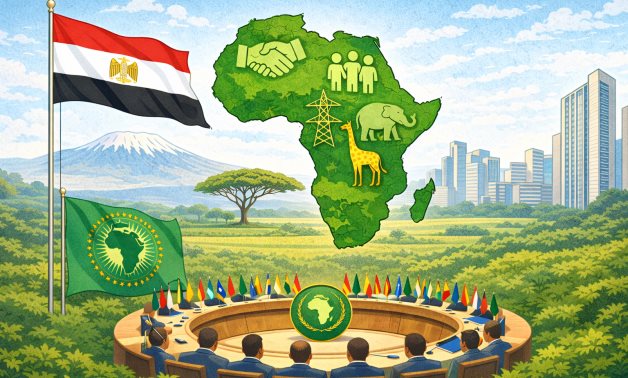
A visual montage highlights Egypt’s expanding Africa agenda, linking diplomacy with trade, energy, logistics, and development - Egypt Today




CAIRO - 23 JANUARY 2026: Egypt’s Foreign Minister for Foreign Affairs, Emigration and Egyptian Expatriates, Dr. Badr Abdel Aaty, held a high level meeting on Thursday, 22 January, with senior officials and staff from the Ministry’s Africa sector, as part of Cairo’s push to sustain close coordination and sharpen Egypt’s engagement across the continent.
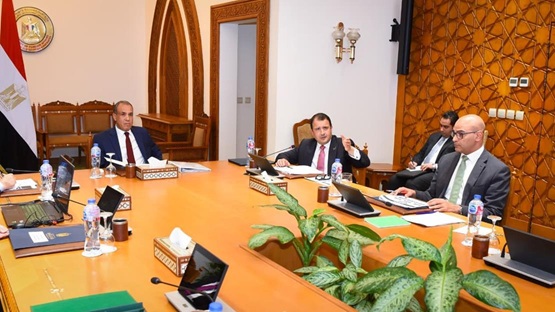
The meeting, framed as part of the ministry’s routine outreach to its Africa teams, carried a clear message: Africa remains a core pillar of Egyptian foreign policy, not a file managed episodically, but a strategic circle anchored in history, shared interests, and a forward looking vision for mutual benefit.
Abdel Aaty underscored what he described as the special priority the Egyptian state assigns to its African circle, emphasizing the depth of Egypt’s historic ties with African countries and the shared interests that bind them.
He stressed Egypt’s commitment to strengthening relations on the basis of partnership, integration, and mutual benefit. That framing is important, because it positions Egypt’s approach not as transactional diplomacy, but as a long term engagement that connects political coordination with development cooperation and economic opportunity.
The foreign minister called for intensified efforts to expand Egypt’s on the ground presence across the continent, with a particular emphasis on three strategic theatres: the Horn of Africa, the Nile Basin, and the Sahel.
These are regions where security, governance, and development are closely intertwined, and where regional dynamics can have direct implications for Egypt’s national interests.
Abdel Aaty highlighted two priorities in that context:
By placing these issues alongside partnership and development, he presented a comprehensive approach: defending national interests while advancing cooperative agendas that serve wider regional stability.
A major theme of the meeting was the expansion of economic cooperation with African partners, with an emphasis on trade, investment, and delivery focused projects.
Abdel Aaty urged stronger work to boost intra African trade and deepen economic ties through:
The thrust of this agenda is to translate political engagement into tangible economic outcomes, and to support African integration by creating infrastructure and energy platforms that make trade and movement more efficient.
The foreign minister also emphasized the value of expanding strategic partnerships and establishing more joint cooperation committees with African countries.
He encouraged building on recent high level visits and external tours, especially those accompanied by business delegations and private sector representatives. The goal, he said, is to widen the pipeline of implementable projects and create real development outcomes on the ground, in ways that deliver mutual gains.
This is a practical model that links diplomacy to market opportunities, positioning Egyptian expertise and companies in sectors where many African states are scaling up investment, while also reinforcing Egypt’s political partnerships.
Abdel Aaty highlighted the importance of broadening Egypt’s executive and development instruments in Africa, pointing in particular to the Egyptian Agency of Partnership for Development as a key vehicle.
He cited the nearing opening of the Julius Nyerere Hydropower Project in the United Republic of Tanzania as a successful model of development cooperation, presenting it as an example of how Egyptian technical capacity can contribute to large scale African infrastructure priorities.
He also referenced the continuation of a dedicated financing mechanism to support projects in the Southern Nile Basin countries, funded at 100 million dollars, describing it as part of Egypt’s structured commitment to sustainable development partnerships in the region.
In parallel, Abdel Aaty directed Egypt’s embassies across Africa to intensify cooperation with host countries in a broad range of sectors, notably:
He also stressed the need to increase high level engagements and political consultations to sustain momentum, accelerate coordination, and push forward cooperation across multiple tracks.
The meeting also featured an exchange of views on strengthening Egypt’s presence in Africa and consolidating cooperation frameworks.
Abdel Aaty reaffirmed Egypt’s firm commitment to supporting African sister states and to building effective partnerships based on shared interests. He also emphasized Egypt’s support for efforts to promote peace and security and advance the peaceful settlement of disputes.
The underlying message was that development and stability must move together: reducing conflict risks, supporting political solutions, and strengthening institutions as a foundation for economic growth and regional integration.
The bigger picture: Egypt’s Africa policy as proactive, connected, and delivery driven
Taken together, the meeting conveyed a coherent direction for Egypt’s Africa engagement in 2026:
By focusing on partnerships, implementation, and mutual benefit, Egypt is presenting itself as a stabilizing actor and a development partner, aiming to strengthen regional integration and respond to African aspirations for growth, connectivity, and opportunity.

Be Social




Comments
Leave a Comment