
Gemini-generated photo on the online violence against women




CAIRO – 22 January 2026: One of the most devastating consequences of Technology-Facilitated Gender-Based Violence (TFGBV) is the profound harm it can inflict on victims’ mental, social, and physical well-being.
This was tragically illustrated by a divorced woman from Helwan, southern Cairo, whose life spiraled into chaos after her private photos and intimate recordings were deliberately shared online. The relentless online abuse eventually drove her into deep psychological distress and drug addiction, according to the victim’s former lawyer Asmaa Telib.
The perpetrator hacked the victim’s mobile phone before their engagement and stole her private photos, videos, audio recordings, and contact information; that is when his behavior grew increasingly aggressive. When the victim decided to end the relationship, he threatened to expose her intimate content and coerced her into sexual acts on two occasions, the lawyer said on condition of not revealing the personal data of the victim.
He then escalated by creating a WhatsApp group including her relatives and sent them her private photos and audio recordings. This public humiliation destroyed her reputation and severely affected her daughters, who were forced to witness their mother’s dignity being violated, Telib continued.
Under this unremitting pressure, the victim was pressured to use drugs. The perpetrator, with the help of an accomplice skilled in social media hacking, accessed her Facebook account, obtained her colleagues’ contact information, and sent them her intimate audio recordings from fake accounts, Telib said, adding that the perpetrator deliberately avoided being tracked down by deactivating the accounts he used and restarting his router.
“This violence not only affected the victim but also took a huge toll on her daughters, who became isolated at school and faced humiliation among classmates.” Telib revealed, calling for toughening the punishment against the perpetrators of such crimes as the applicable laws are not deterrent enough.
This case starkly shows how TFGBV can ruin lives far beyond the digital space, destroying reputations, harming families, and causing long-term psychological and social damage, often leaving victims with little recourse to justice.
Public figures vulnerable to online violence
TFGBV incidents like ransomware and data breaches are not new in the virtual world; related crimes have been on the rise in Egypt, particularly after the incidents that involved celebrities and public figures.
Egyptian actress Riham Abdel Ghafour condemned the violation of her privacy after being photographed without consent at a cinema, highlighting the broader issue of image-based abuse. In response, the Actors’ Syndicate vowed to take legal action against those who publish unauthorized and offensive content, stressing that such acts harm both celebrities and the reputation of Egyptian art.
The virtual violence that was committed against Abdel Ghafour (non-consensual recording and sharing of images) is criminalized under two Egyptian laws. Article 309 bis of the Penal Code stipulates that: "Anyone who violates the sanctity of private life by taking or transmitting a photograph or recording without permission shall be punished by imprisonment."
Additionally, Article 309 bis (a) stipulates that: "Anyone who publishes or circulates such photographs or videos without the consent of their owners shall be punished by imprisonment for a period of not less than one year and a fine of not less than EGP 5,000 and not exceeding EGP 50,000."
Furthermore, Article 25 of the Cybercrime Law No. 175 of 2018 criminalizes acts that violate family values or personal privacy through digital means. It penalizes sending unsolicited mass electronic messages, using or sharing personal data without consent, and publishing private information or images without permission, regardless of whether the content is true or false. Offenders may face imprisonment of at least six months, and a fine between EGP 50,000 and 100,000, or both.
Also, Egyptian lawyer and gender consultant Nehad AboulKomsan was threatened with an intimidating image sent via WhatsApp after she commented on a metro dispute involving an elderly man and a young woman. Police identified and arrested the perpetrator, who admitted to sending the image taken from social media without permission to intimidate her over her views on the incident.
TFGBV crimes on a rise
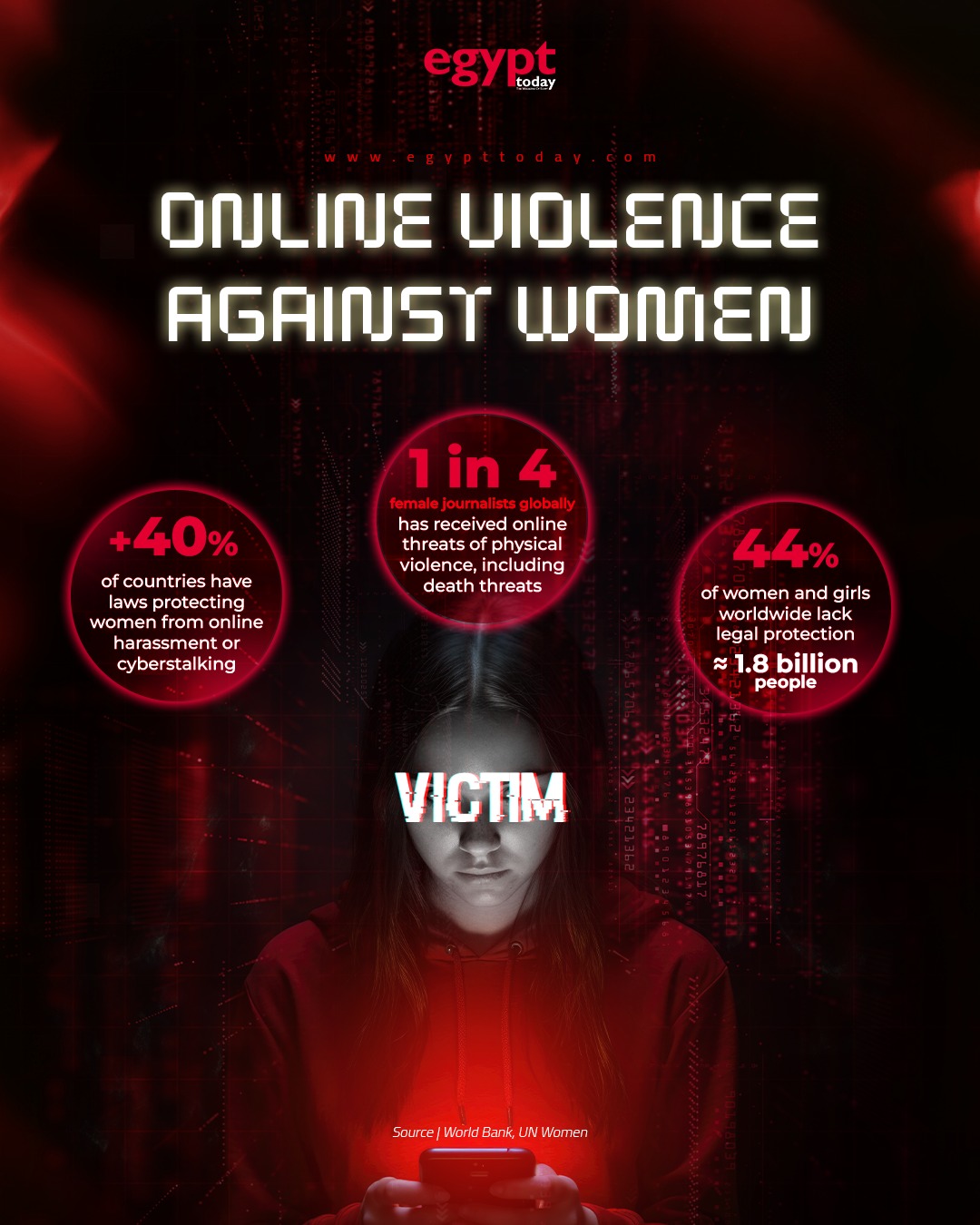
According to World Bank data, fewer than 40 percent of countries have laws protecting women from online harassment or cyberstalking. As a result, 44 percent of the world’s women and girls, approximately 1.8 billion people, lack access to legal protection. Women in leadership roles across business and politics are increasingly targeted by deepfakes, coordinated harassment, and gender-based disinformation campaigns designed to silence them or push them out of public life. Globally, one in four female journalists has reported receiving online threats of physical violence, including death threats, according to UN Women.
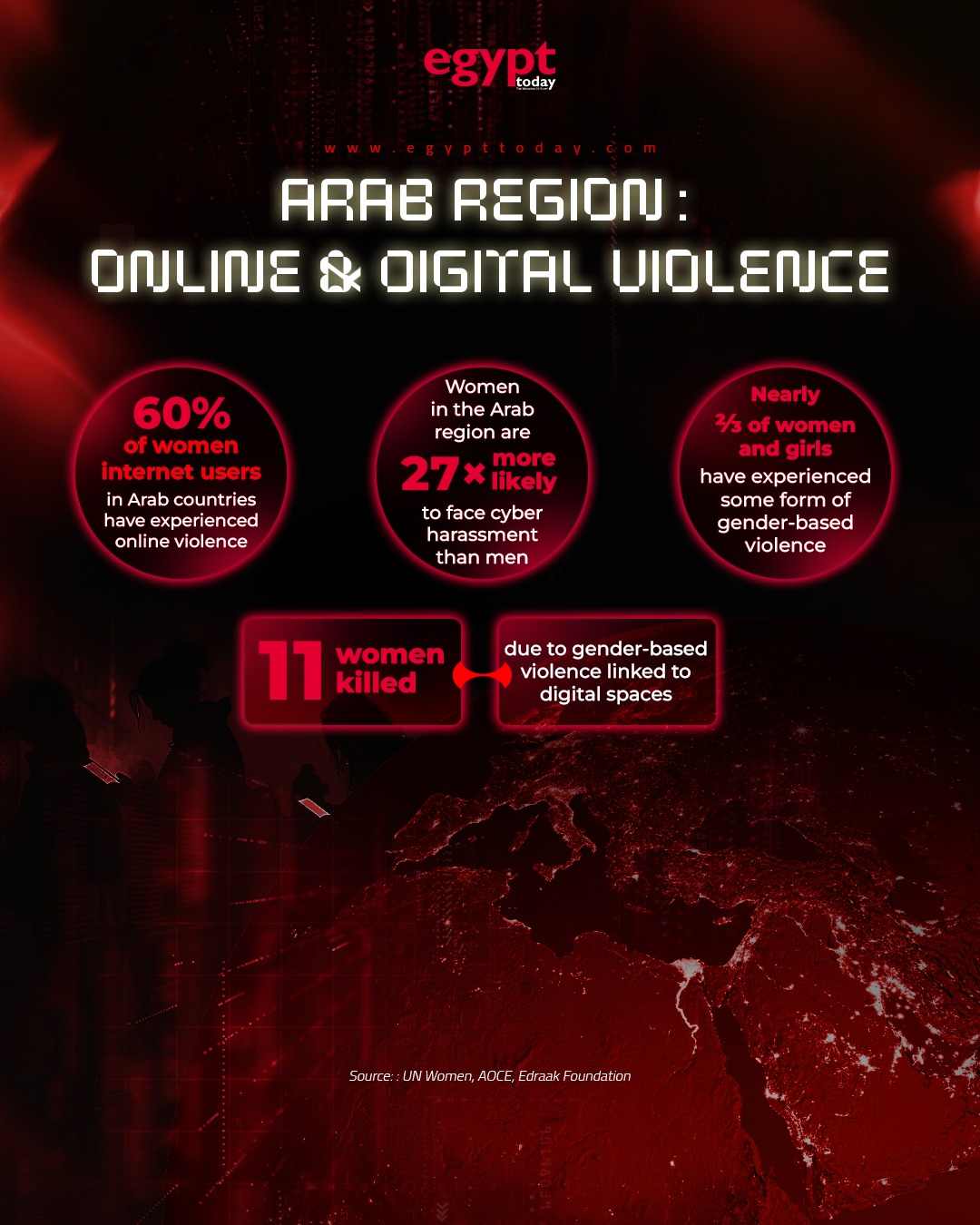
UN Women reported in November 2025 that 60 percent of women internet users in Arab countries have been subjected to online violence.
Also, Al-Azhar Observatory for Combating Extremism (AOCE) released a report in December 2025 on cyber violence against women in the Arab world that revealed that women in the Arab region are 27 times more likely to experience cyber harassment than men, adding that digital violence has become one of the fastest-spreading forms of abuse.
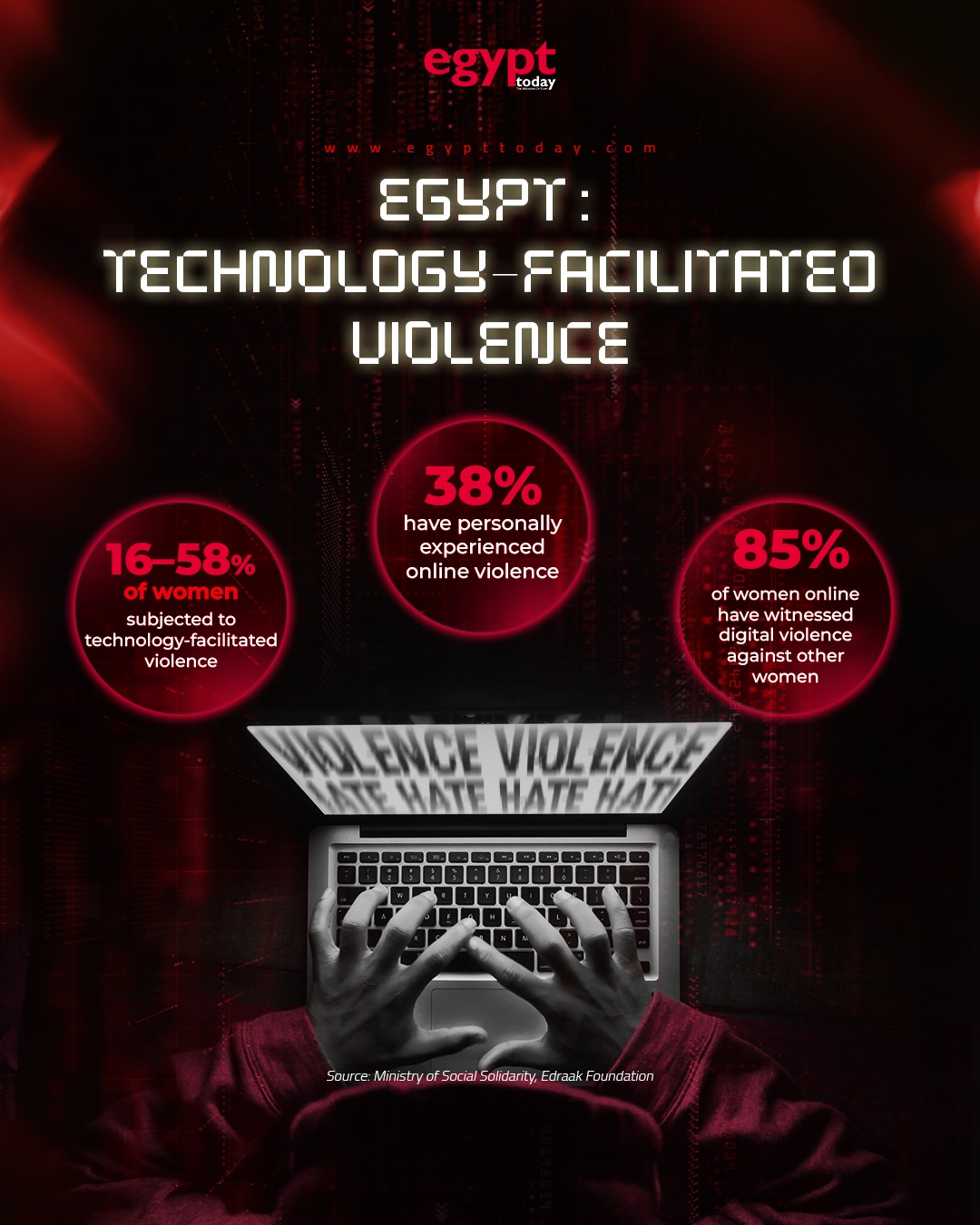
In Egypt, violence is increasingly prevalent in digital spaces. In November 2024, Minister of Social Solidarity Maya Morsy said that studies show that between 16 and 58 percent of women have been subjected to technology-facilitated violence, 38 percent have personally experienced online violence, and 85 percent of women who spend time online have witnessed digital violence against other women.
The Edraak Foundation for Development and Equality reported that nearly two-thirds of women and girls in the Arab region have experienced some form of gender-based violence. In its latest biannual report, the foundation added that 11 women have lost their lives as a result of gender-based violence linked to digital spaces.
During the first half of 2025, Edraak documented 19 cases of technology-facilitated gender-based violence (TFGBV) in Egypt, in which perpetrators blackmailed victims for money or coerced them into sexual relationships.
The foundation also documented three incidents of illegal filming, three cases of blackmail involving private photos and videos, and three cases of defamation using images or videos. It also recorded one incident in which a father blackmailed his daughter after filming her during a rape. Further, two murder cases were documented: in one, the victim killed the person who was threatening her; in the other, the blackmailer killed the victim’s husband.
A total of 10 cases of defamation and slander against women and girls through the dissemination of videos on social media platforms have been documented, the foundation said, adding that the perpetrators were detained and held accountable.
Why does TFGBV increase?
Recent legislative changes have criminalized harassment and strengthened penalties for sexual harassment and the defamation of individuals and families, Dr. Mona Fathy, lawyer and cybersecurity expert, told Egypt Today. “Despite this progress, cases of cyber violence, particularly against women and girls, continue to rise,” she stressed.
Fathy noted that harassment is not limited to public figures but extends to ordinary women, particularly divorced women, and stems from a deeply rooted perception that women are inferior to men, let alone divorced women. While the perpetrators may face legal consequences, addressing and dismantling this mindset requires long-term societal change.
What’s more, cybercrime litigation is often lengthy, and some cases are dismissed, leaving victims with limited access to justice, while retaining the right to appeal decisions issued by the Attorney General or the Public Prosecutor’s Office and to file formal grievances, Fathy continued.
However, she said, efforts to combat cyber violence face two main obstacles. The first is a lack of public awareness regarding victims’ rights, including the non-waivable right to pursue legal action, and the second is the widespread use of social media and electronic games, which has normalized violence and increased aggressive behavior.
Learned violence is especially difficult to counter, as it becomes ingrained over time. This normalization has extended beyond harm to individuals, affecting broader societal and environmental issues, such as online campaigns calling for the killing of stray dogs, which threatens ecological balance.
A 2023 Jordanian study found that cyber violence in the Middle East has increased by 70 percent The study also showed a direct correlation between the increased use of social media and the rise in cyber violence, with violent content becoming more visible across digital platforms.
The findings underscore the need to revise existing laws, strengthen penalties, and ensure access to justice. Raising public awareness, particularly legal awareness, remains a critical responsibility.
In media comments to Youm7, Ahmed Badawy, a member of the House of Representatives from the Future of the Nation Party and former head of the Communications and Information Technology Committee, stated that social media platforms are being exploited to spread rumors and foster public frustration.
He explained that Parliament, as the state’s legislative authority, is working in close coordination with the government to address these challenges. Badawy noted that a strong legislative package is expected during the third legislative session, pointing to the Prime Minister’s announcement of the Data Sharing Law and substantial amendments to the Information Technology Law, which had been requested by the committee.
He added that the amendments include tougher penalties, as well as new provisions targeting online gambling and emerging digital crimes.
What to do if you experience cyber violence?
Victims can seek support by reporting incidents through official channels, such as the Ministry of Interior or the Public Prosecutor’s online platforms, particularly in cases involving women or children, said Fathy.
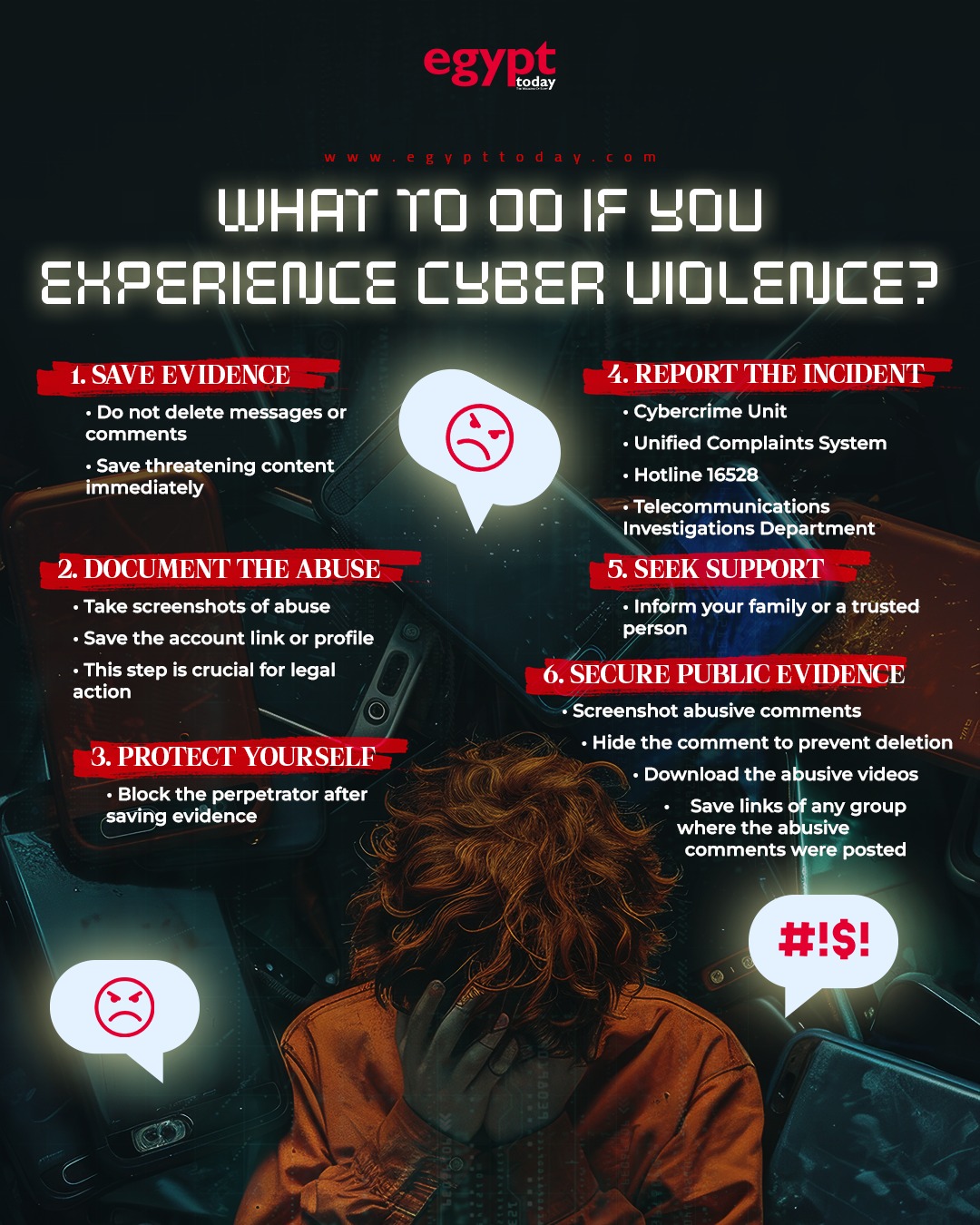
Specialized units within these institutions monitor and address digital violence, and complaints can be submitted through Egypt's Unified Government Complaints System (UGCS). It is essential that victims do not alert perpetrators to any legal action, as this may allow them to evade accountability, she continued. The following infographics has the essential steps to take in such cases as recommended by Fathy:

Be Social




Comments
Leave a Comment