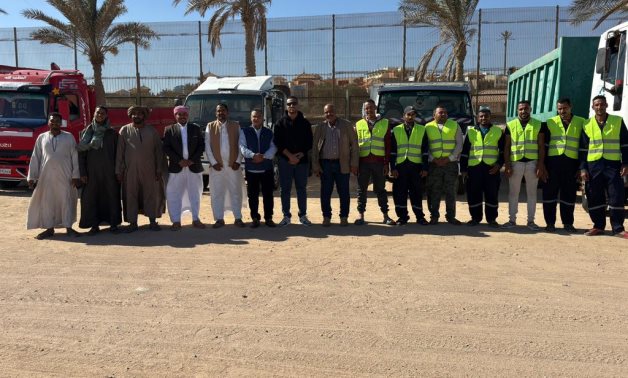
Members of the Ain Waste Management Company, a Bedouin-owned firm - press photo




CAIRO – 19 January 2026: Dr. Manal Awad, Minister of Local Development and Acting Minister of Environment, announced the launch of an integrated waste management system in the Nabq Natural Reserve as part of the Ministry’s “Green Sharm” project. The initiative is being implemented in cooperation with Ain Waste Management Company, a Bedouin-owned firm that operates according to modern environmental and developmental principles.
Awad explained that the new system is part of a comprehensive vision aimed at protecting the Nabq Natural Reserve’s unique ecosystems and reducing the negative impact of waste on wildlife and biodiversity, thereby ensuring the sustainability of natural resources for future generations.
She highlighted the project’s strong social dimension, noting that it integrates local communities into environmental protection efforts. Ain Waste Management Company relies on members of the Bedouin community to carry out waste collection, sorting, and management activities, providing tangible job opportunities, improving living standards, and raising environmental awareness among local residents.
Awad added that engaging a Bedouin-owned company reflects the Ministry’s commitment to empowering the people of Sinai and involving them directly in environmental conservation projects. This approach contributes to the creation of green jobs, achieves both environmental and economic benefits, and helps preserve the distinctive ecological character of the region’s nature reserves.
The minister noted that the waste management system in the Nabq Protected Area represents a pioneering model that can be replicated in other nature reserves and tourist destinations. Such efforts, she said, will strengthen South Sinai’s standing as a global ecotourism destination while safeguarding its natural and cultural heritage.
Awad further emphasized that the system is based on integrated, environmentally friendly practices, including the collection of waste from tourist and service areas within the reserve, source-based waste sorting, recycling of reusable materials, and the safe disposal of remaining waste in accordance with approved environmental standards. These measures contribute to reducing pollution and protecting sensitive ecosystems. The system also prioritizes environmental awareness for workers and visitors and promotes community participation at all stages of implementation, enhancing efficiency and ensuring long-term sustainability.

Be Social




Comments
Leave a Comment