





In an interview granted to Egypt’s Middle East News Agency (MENA), Momani said the Jordanian syndicate is keen to strengthen cooperation with Egypt’s Journalists Syndicate. He said recent talks with Egyptian Journalists Syndicate head Khaled Elbalshy resulted in an agreement to broaden cooperation and maintain regular communication in the coming period to support journalism in both countries.
Momani said ties with Egypt are of particular importance as both syndicates are members of the Arab Journalists Union, which is headquartered in Cairo. He stressed the need for strong, institutional relations with the Egyptian syndicate across training, capacity building and coordination on professional issues, in line with Jordan’s state policy under King Abdullah II to enhance bilateral relations and align positions in international forums.
He reaffirmed full support for the Arab Journalists Union, expressing hope that it would become more influential and effective in the next phase.
On Palestine, Momani said the Palestinian cause is a core Jordanian issue and a supreme national interest, reiterating that the establishment of a Palestinian state remains the central cause of the Arab world. He said Jordanian media has given extensive coverage to the issue, at times more comprehensive than some Palestinian outlets, reflecting strong popular and official awareness of its importance.
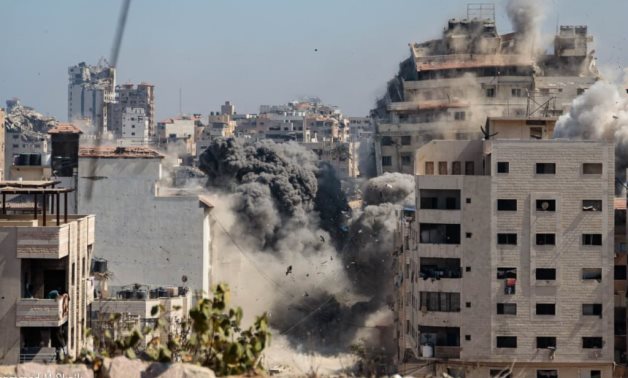
Addressing coverage of Israel’s war on Gaza, Momani said Jordanian media continued reporting despite strict Israeli restrictions, including barring journalists from entering the enclave and relying on a limited number of sources inside Gaza, some of whom were directly targeted.
He said nearly every meeting, seminar or conference held in Jordan underscores the centrality of the Palestinian cause, the Palestinian people’s right to self-determination and support for their legitimate struggle.
Momani said media coverage during the Gaza war helped shift long-held views among global public opinion, particularly in Europe, by exposing facts and advancing the Arab narrative against misinformation. Despite challenges, he said Arab media managed to exert some influence internationally, stressing the need to unify terminology used by Arab outlets when covering Palestine in what he called a “war of terms.”
He said the Arab Journalists Union, alongside national syndicates, has a key role in coordinating positions and standardizing concepts and terminology on Palestine, a priority that Jordanian media seeks to uphold.
On press freedom, Momani said the syndicate opposes any restrictions on media freedom, calling it a pillar of state development that builds public trust and attracts investment as a form of soft power. He noted that Jordan enacted a Right to Access Information Law in 2007, becoming the first Arab country to guarantee public access to information.
He said the law, driven by syndicate efforts, supports transparency and the flow of information without infringing on press freedom, alongside clear accountability mechanisms. He added that amendments to penalties and publication laws in 2006–2007 prohibit the detention of journalists in publication cases, limiting penalties to fines.
Momani said Jordan’s judiciary has supported press freedom through rulings that favoured journalists, including in cases involving former prime ministers. He added that King Abdullah continues to call for openness toward the media and information flow, with professional accountability mechanisms in place when errors occur.
On challenges facing journalism, Momani said the sector is undergoing profound change due to the information revolution, the rise of artificial intelligence and data journalism. He said Jordanian journalism has been significantly affected, particularly by financial pressures on privately owned newspapers and public shareholding companies.
He said difficulties in accessing information sometimes stem from limited awareness among some officials of the media’s role, despite legal guarantees, while reiterating the king’s directives to strengthen transparency and media openness.
Momani also pointed to the rapid spread of information via social media and AI, saying they have contributed to misinformation, underscoring the need for stronger fact-checking and transparency to rebuild public trust.
He said training is a top priority for the syndicate’s 2025–2028 term, through its training centre, partnerships with universities and media institutions, and plans to establish an independent training facility.
Momani said about 1,400 Jordanian journalists are registered with the syndicate, which is working to protect the profession by monitoring impersonation on social media and referring violators to the courts, while maintaining professional standards. The syndicate is also cooperating with accreditation bodies to update media curricula and organizing dialogue sessions to ease student training in news organizations.
On the future of print media, Momani said newspapers would continue as a “hallmark of truth,” calling for modernized tools, diversified revenue streams and greater reliance on investigative reporting and in-depth analytical coverage, while maintaining strong ties with audiences.
He concluded by saying the syndicate’s foremost concern is improving journalists’ living standards and skills to ensure Jordanian journalism continues to play its vital role in conveying facts and shaping public opinion.


Comments
Leave a Comment