CAIRO — 10 NOVEMBER 2025: On the first day of Egypt’s 2025 House of Representatives elections inside the country, polling proceeded across 14 governorates in phase one under full judicial supervision and centralized monitoring by the National Election Authority (NEA). With opening hours spanning the full day and turnout patterns varying by district, the Authority says procedures and safeguards were designed to keep voting orderly, transparent, and accessible, while maintaining real-time oversight through an operations hub in Cairo.
To assess the day’s progress, QNews spoke with Counselor Ahmed Bendary, Director of the Egyptian Executive Body of the NEA. In a wide-ranging conversation, Bendary discussed early turnout signals, the mechanics of live oversight and complaint handling, integrity protections inside polling stations, and how logistics were calibrated once the voter register was finalized. He emphasized that candidate dynamics at the district level can shape crowds at different hours, and that the Authority expects participation to build as voters finish their workday.

Q: Counselor Bendary, how would you evaluate overall turnout on day one across the 14 governorates taking part in the first phase?
A: It’s too early to describe turnout in definitive terms, but we’ve seen strong participation in several governorates and steadier flows in others. This variation is normal and often reflects the competitive landscape on the ground. In some districts, there are dozens of candidates; in others, far fewer. That difference affects how and when voters mobilize. What is clear is the eagerness of citizens to exercise their democratic rights. We also anticipate higher volumes later in the day as many people finish work.
Q: What measures has the National Election Authority put in place to ensure voting proceeds smoothly and transparently at all polling stations?
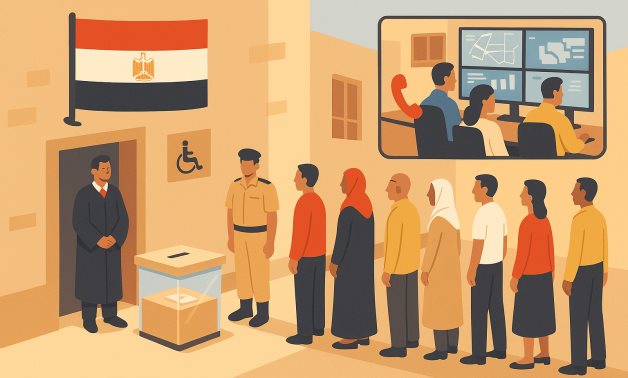
A: The NEA’s central operations room has live, continuous visibility on the process. We stay in direct contact with subcommittees and committee directors, and we receive complaints and inquiries through an official hotline. We also track issues that surface on social media and from accredited monitors. From ballot handover to insertion into the box, the chain of custody is observed and supervised. This real-time feedback loop allows us to resolve procedural questions quickly and keep the process running smoothly.
Q: What mechanisms are in place to guarantee integrity and prevent violations inside polling stations?
A: Integrity is non-negotiable. In every governorate where voting is taking place, we enforce rules that prohibit irregularities by any party—candidates, campaign teams, or voters. So far, we have not received substantiated complaints of violations inside stations. Our teams remain in continuous contact with committees to evaluate conditions around the clock. When issues arise, a dedicated committee within the NEA reviews them and takes appropriate, timely decisions in line with the law.
Q: With tens of millions eligible to vote in phase one, how did the Authority manage ballots, staffing, and security coordination?
A: The logistics were calibrated after the voter roll was finalized. Once voters were officially invited to the polls and the database closed, we used that fixed figure to size our operations—ballot printing and distribution, staffing levels for committees and subcommittees, and the necessary coordination with security and support services. The goal is simple: every station must have the materials, personnel, and access arrangements needed to serve voters efficiently throughout the day.
Q: You mentioned live oversight. How exactly does the operations room intervene if a station needs support?
A: The operations room functions as a central switchboard and supervisor. If a station reports long queues, a technical query, or a supply need, we can coordinate additional staffing, clarify procedures, or dispatch support. If we detect online reports alleging an issue, we verify rapidly with local committees. The hotline adds a second channel: voters and stakeholders can report concerns, which we log, assess, and escalate when required. The emphasis is on fast, documented responses.
Q: Candidate activity can be intense near polling locations. How do you balance access and enforcement?
A: Campaigning is part of the process, but the rules are clear: no influence inside polling stations. We work closely with local authorities to maintain appropriate perimeters and ensure a neutral environment where voters can cast ballots free of pressure. Our committees have the authority to intervene if behavior crosses the line. As I said, we have not received verified complaints about violations inside stations today.
Q: Beyond integrity, accessibility matters: seniors, first-time voters, and people with disabilities often need additional support. What did you put in place?
A: Stations are briefed to provide guidance at entry points and inside corridors so people can locate their assigned committees quickly. Staff can assist with directions and procedural questions, while maintaining secrecy of the ballot. Information desks and visible signage are standard. The hotline can also help voters confirm locations and clarify timing. The idea is to reduce friction so that the experience is straightforward for every voter.
Q: What should voters who have not yet gone to the polls expect for the remainder of the day?
A: They should expect open doors during announced hours, organized queues, and staff ready to assist with procedure. As the day progresses, we usually see waves as people arrive after work. Our monitoring and logistics are structured to accommodate these peaks. We encourage citizens to come prepared with their identification and to follow staff instructions inside stations to keep the flow orderly.
Q: How do you assess the role of accredited observers and media in today’s process?
A: Observers and media are part of the transparency framework. They help document procedures and provide independent visibility. We maintain channels with them so operational questions can be answered quickly. Their presence supports public confidence when it’s paired with clear rules and professional conduct.
Q: Finally, when should the public expect a more conclusive assessment of turnout and any preliminary observations?
A: A responsible assessment comes after stations close and reports are compiled. Today’s indications are encouraging in many areas, and we’ll have a clearer picture once we complete the first phase and review the formal data. Our focus now is maintaining smooth operations through the end of the voting window.
Counselor Bendary’s remarks underscore three themes defining day one of phase one: variable turnout patterns shaped by district competition, tight operational control through a real-time monitoring hub and hotline, and strict integrity protocols inside stations.
With evening hours traditionally bringing an uptick in traffic, officials expect lines to build as voters finish work, while the Authority’s centralized oversight aims to keep the process steady through close.








Comments
Leave a Comment