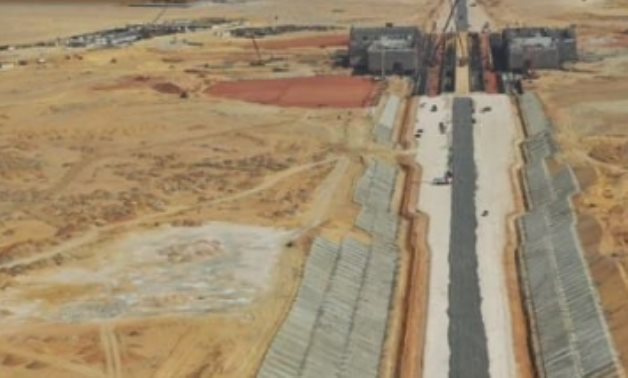
First line of Speed electric train




CAIRO - 14 October 2025: Egyptian Prime Minister Dr. Mostafa Madbouly conducted a major site visit today to inspect the testing and trial operation phases of the colossal Egypt-Saudi Electric Interconnection Station in Badr City. The station, operating at a 500 kV DC (Direct Current) capacity, is the first of its kind in the Middle East in terms of scale, manufacturing technology, and operational use for grid interconnectivity.
Prime Minister Madbouly was accompanied by Eng. Mahmoud Esmat, Minister of Electricity and Renewable Energy, Dr. Manal Awad, Minister of Local Development (acting Minister of Environment), and other senior officials and representatives of the project’s executing consortium.
Dr. Madbouly emphasized that the visit underscores the government’s commitment to overseeing the final stages of this vital station, which forms a crucial pillar of the Egypt-Saudi electric grid interconnection project. He noted the project receives direct attention from President Abdel Fattah El-Sisi due to its significance as an active model for Arab integration in the energy sector. The interconnection is expected to enhance grid efficiency, support stability, and utilize available generation capacity during peak load periods.
Eng. Mahmoud Esmat highlighted that the project aims to create a robust electrical energy bridge between the two nations, ultimately contributing to the establishment of a comprehensive, integrated electricity network. This will allow for the efficient and flexible exchange of electrical power, paving the way for a shared Arab electricity market.
The Minister further explained that the project’s core economic benefit is exploiting the difference in peak load times between the two national grids. This will maximize the utilization of power generation capacities in both Egypt and Saudi Arabia, reduce fuel consumption, and ensure the economic operation of the grid. The connection links the two largest electricity grids in the region, positioning it as the nucleus for future interconnection between the continents of Africa, Asia, and Europe.
During the tour, which included the inspection of the control center and various sections, Prime Minister Madbouly stressed the need to adhere strictly to the operational timeline. Project officials confirmed the completion of key infrastructure, including the Badr Converter Station, the Taba 2 Switching Station, the 500 kV Badr/Taba 2 overhead line (approx. 320 km long), and all marine and land cable installations. The final connection and integration into the unified electrical grids of Egypt and Saudi Arabia are scheduled for before the end of this year.
Following the inspection, PM Madbouly chaired a meeting with the executive teams. He directed the consortium to accelerate efforts to finalize Phase Two of the project, ensuring the entire project is fully operational by April 2026.
The Prime Minister also called for professional documentation of the mega-project to showcase the tremendous effort involved. The executing companies, who have logged approximately 11.6 million working hours to date, praised the government’s consistent support and follow-up.
Madbouly concluded by highlighting the competence of the Egyptian workers employed on the project and called for the establishment of technical schools to train young Egyptians in specialized skills, facilitating the potential export of this skilled labor for similar projects in other countries.
The Egypt-Saudi electric interconnection project has a total capacity of 3000 MW and involves three massive high-voltage converter stations: one in East Medina, one in Tabuk (Saudi Arabia), and the Badr station in East Cairo. These stations are connected by approximately 1,350 km of overhead lines and marine cables.

Be Social




Comments
Leave a Comment