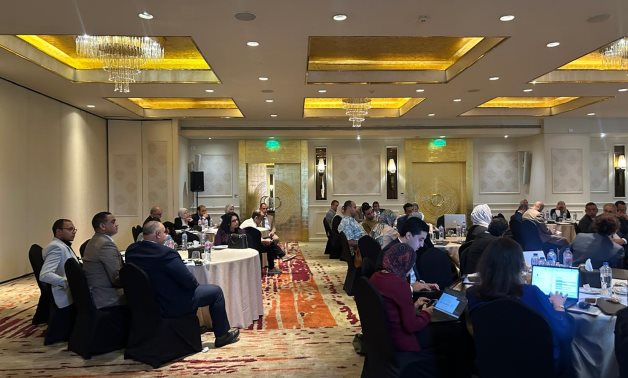
UN-Habitat event - file




CAIRO - 28 August 2025: Egypt is placing strong emphasis on harnessing technology to reshape its urban future, with government officials and UN representatives underscoring the importance of digital transformation in building smarter, more inclusive, and sustainable cities.
Speaking at the opening of a workshop organized by the UN-Habitat program under the theme “Building Digital Capacities for Urban Community Leaders and Local Administration,” Dr. Abdel Khaleq Ibrahim, Assistant Minister of Housing, Utilities, and Urban Communities, outlined Egypt’s commitment to integrating digital tools into urban development.
“Our work follows a clear strategic plan aimed at improving the quality of life for citizens across all governorates,” said Dr. Ibrahim, adding “Placing people at the heart of urban planning and implementation ensures equitable access to services while keeping pace with global technological trends.”
Linking Technology with Urban Growth
Ahmed Rizk, UN-Habitat’s Representative in Egypt, emphasized that technological innovation has become a cornerstone of urban development worldwide—and Egypt is no exception.
“Egypt has shown serious commitment to linking technological advancement with urban growth,” Rizk noted, highlighting projects such as the Digital Urban Observatory and participatory planning tools like "Our District." These initiatives, he explained, not only enhance service delivery but also promote transparency, inclusivity, and better decision-making across cities.
While urbanization brings economic opportunities, Rizk signaled the pressures created by rapid population growth, environmental challenges, and housing demands. “Technology can help us meet these challenges,” he said, “but its true measure lies in how it improves people’s lives, especially for women, youth, and vulnerable communities.”
By 2050, two-thirds of the global population is expected to live in urban areas, creating both opportunities and pressures for cities. UN-Habitat officials stressed that adopting digital tools—from satellite imagery to artificial intelligence—can transform urban management, enabling efficient planning, faster response to crises, and wider public engagement in decision-making.
Capacity Building and International Cooperation
The workshop, organized in collaboration with the UN-Habitat Technology and Innovation Acceleration Center (UNITAC) and Egypt’s Urban Training and Studies Institute at the Housing and Building Research Center (HBRC), reflects growing international cooperation in urban innovation.
Dr. Tarek El Sheikh, Director of the Training Institute at the National Building Research Center, highlighted efforts to build leadership competencies and technological capabilities for city leaders. Initiatives include the creation of an Urban Solutions Laboratory to fast-track project development and overcome implementation hurdles, alongside collaborative learning platforms connecting experts and policymakers.
.jpeg "WhatsApp Image 2025-08-28 at 5.37.55 PM (1)")
Lamia El-Meligy, Project Manager for Local Development Policies and Urban Economy at UN-Habitat, added that digital transformation now lies at the core of development strategies. “Our goal is to empower Egyptian decision-makers and local authorities with the latest digital tools and international best practices to ensure sustainable, inclusive urban growth,” she said.
Training programs under discussion aim to address gaps in technical expertise and urban management. Modules will cover topics such as smart city applications, quality control, urban planning technologies, and digital infrastructure development—all designed to prepare local leaders for the challenges of modern urbanization.
A human-centered approach to smart cities
UN-Habitat officials emphasized that smart cities are not defined by the number of sensors or data points, but by their ability to improve the lives of citizens. “Technology must be people-centered,” Rizk stated, “ensuring that innovation benefits everyone, especially marginalized groups.”
This vision aligns with the Cairo Call to Action, a roadmap for resilient and inclusive cities launched during the World Urban Forum’s twelfth session (WUF12) in Cairo. The call emphasized local authorities’ capacity building, digital transformation, and citizen-centered urban planning as key pillars for sustainable development.
As Egypt strengthens partnerships with international organizations, the focus remains on using technology not for its own sake, but as a catalyst for economic growth, social inclusion, and environmental sustainability.
“The decisions we make today on digital transformation,” Rizk concluded, “will shape the future of our cities and determine how well we achieve the Sustainable Development Goals in the decades to come.”

Be Social




Comments
Leave a Comment