Cables




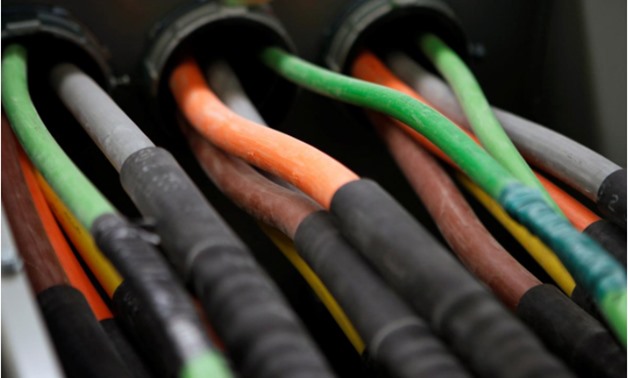
CAIRO – 20 August 2025: In line with the Egyptian government's focus on strengthening cooperation with African nations, the Information and Decision Support Center (IDSC) has highlighted a report by the Carnegie Endowment for International Peace titled "Under the Waves: Addressing Vulnerabilities in Africa's Submarine Digital Infrastructure." The report examines the vital role of submarine cables in connecting Africa to the global digital world, detailing how this infrastructure is crucial for improving internet connectivity and boosting economic and technological growth across the continent.
The report notes that submarine cables are the backbone of global internet infrastructure, carrying over 99% of the world's data traffic. Since the early 2000s, these cables have reached African shores, dramatically improving internet access and lowering costs. This has spurred innovation and the development of a sophisticated digital economy. Currently, 77 submarine cables connect Africa to global communication networks. However, the report stresses that the infrastructure urgently needs to be developed and secured against increasing risks.
The report highlights that in March 2024, ten countries in West and Southern Africa faced a major internet outage after four key cables—including the West Africa Cable System and MainOne—were damaged. In May of the same year, East African countries experienced a similar disruption when other cables were severed. These incidents exposed the fragility of the infrastructure and underscored the need for a robust plan to ensure its future stability, especially as Africa's digital economy grows at a rapid pace and depends heavily on the internet.
The report argues that governments and companies must work together to protect these vital cables. It calls for building redundant systems to distribute internet traffic in case of a cable failure and diversifying cable routes so countries don't rely on a single connection. The report also recommends improving governance through regional cooperation among coastal states and standardizing laws and regulations related to submarine cables.
Data shows that 37 out of 38 African coastal countries have submarine cables, with Eritrea being the sole exception. Countries like Egypt, South Africa, Kenya, Nigeria, and Djibouti are considered major hubs in this network. Landlocked countries also benefit from these cables through overland networks that extend across borders. However, some countries still depend on a single cable, leaving them vulnerable to a total outage if a fault occurs.
The report identifies several key causes of submarine cable damage, including earthquakes, accidents from ships or fishing activities, and in some cases, deliberate human interference. Studies estimate that between 70% and 80% of faults are caused by damage from ships or their anchors. The report clarifies that most of these faults occur in shallow coastal waters rather than in deep-sea areas, complicating repairs and raising costs, which can reach millions of dollars per incident.
Another significant challenge facing African nations is the scarcity of specialized cable repair ships. There are fewer than 100 such ships globally, with only three serving Africa, and just one of those is based on the continent. In some cases, it can take over three weeks for a repair vessel to reach a fault location, a lengthy delay given the severe economic damage caused by the outage.
The report also emphasizes the importance of diversifying cable landing points within countries. For example, all cables reaching Kenya land in the city of Mombasa, putting the country at high risk if those cables are affected. The report suggests using alternative technologies like satellites as a backup internet source, despite their drawbacks of slower speeds and higher costs.
The report calls for adopting unified laws across the continent and streamlining the procedures for installing and operating cables, as some countries impose high fees on companies, which can hinder investment. It also recommends establishing a single national focal point in each country for reporting incidents and coordinating among relevant authorities, such as maritime and security agencies and telecommunications companies.
In conclusion, the report stresses that protecting submarine cables is not the responsibility of a single country but a collective one that requires coordination among governments, the private sector, and the international community. By diversifying networks, improving governance, and enhancing regional cooperation, Africa can build a more robust and resilient digital system, which will benefit its economies and people.

Be Social




Comments
Leave a Comment