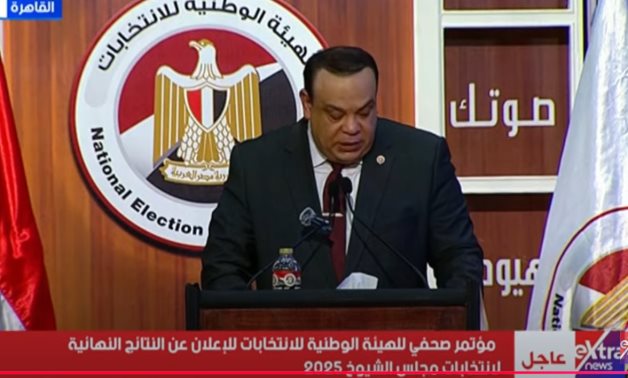




CAIRO – 12 August 2025: Chairman of Egypt’s National Elections Authority Judge Hazem Badawi, announced on Tuesday that the number of voters who cast their ballots in the 2025 Senate Election are 11,837,882 voters, at a rate of 17.1% of the total voter database.
He noted that the number of votes registered in the voter database are 69,333,313 voters and the number of valid votes are 11,321,070 votes, representing 95.63% of the total turnout.
The number of invalid votes was 516,818, representing 4.36% of the total turnout according to Judge Badawi.
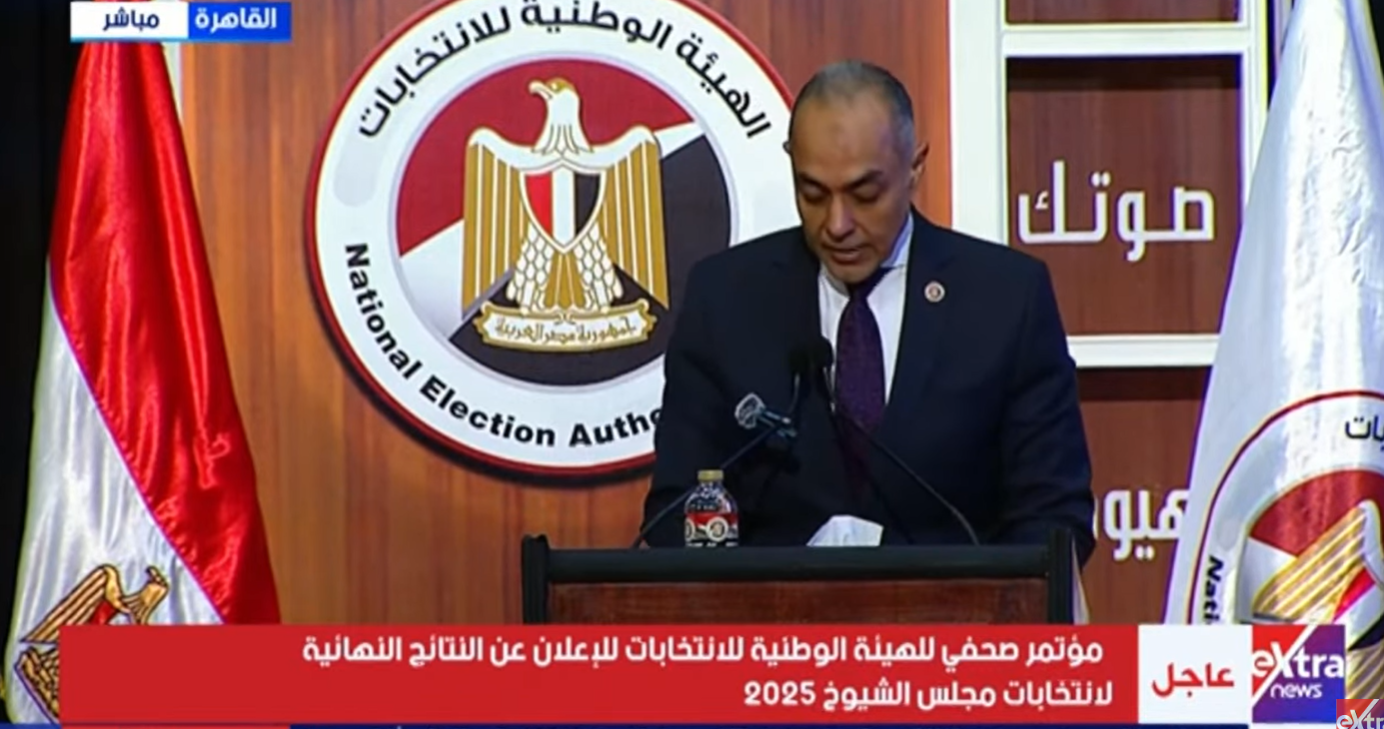
In the list system, Egypt’s Chairman of Egypt’s National Elections Authority announced in a press conference that a single list, called the "National List for Egypt," includes 12 political parties, ran for candidacy in each of the four constituencies designated for lists. The ballot count resulted in receiving more than 5% of the votes of registered voters.
In the individual system, Judge Badawi announced that winners in Cairo Governorate are:
Ahmed Hussein Fayek Sabour
Gamal Abu Al-Fotouh Mohamed Mohamed Ibrahim
Mohamed Magd El-Din Farouk El-Manzlawy
Mohamed Mazloum Mohamed Youssef Motawea
Amir Hilal Ayad Attia
Mohamed Hamdy Mustafa Rizk
Tamer Abdel Hamid Mamdouh Ahmed
Ismail Ali Nasr El-Din Abbas Ali
Mohamed Mustafa Mohamed Nour El-Din
Mohamed Ahmed Abdel Rahman Farag
In the individual system, winners in Giza Governorate are:
Adel Abdel Fattah Mamoun Nasser
Amr Mohamed Yousry Ibrahim Abdo
Omar Ahmed Omar Mohamed Zayed
Mohamed Gamal Mohamed Ali
Adel Zidan Hassan Al-Sudani
Mohsen Mahmoud Abu Bakr Al-Batran
Mahmoud Ali Abdullah Morgan
Ahmed Shaaban Abdel Razek Mohamed
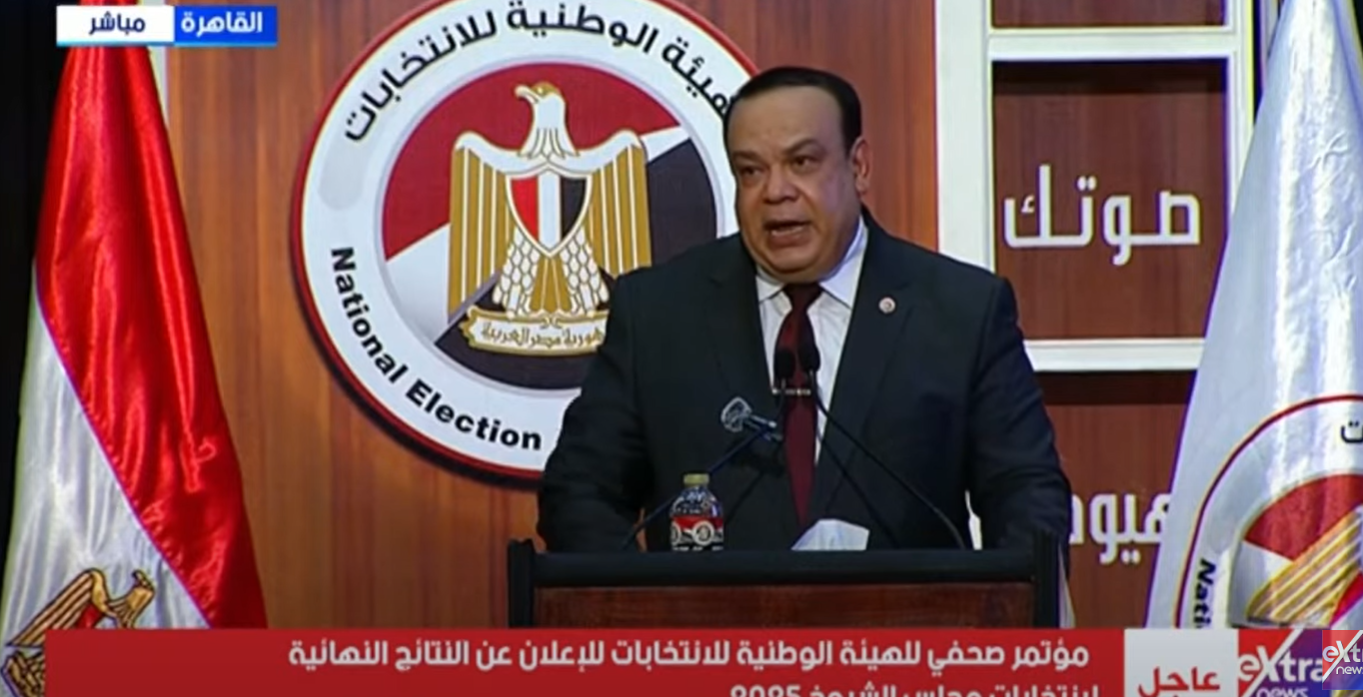
Judge Hazem Badawi said that the good organization of the 2025 Senate elections, the good preparation, keeping pace with digital developments, and its use in the elections received praise from diplomatic missions, civil society organizations, along with local and international media.
Executive Director of the National Elections Authority (NEA) Judge Ahmed Bandari, also said that the 2025 Senate elections were a ‘true reflection of the Egyptians will.
He extended his thanks to ‘everyone who contributed to the success of this constitutional entitlement.’
Judge Bendari noted that Elections was conducted in ‘discipline, transparency, and in a safe environment’ that enabled citizens to exercise their constitutional rights with freedom and responsibility.
The turnout in the 2025 Senate elections, announced by the National Elections Authority, is the highest since the Senate establishment. This compares favorably to the 2020 Senate elections, in which 8,959,035 voters cast their ballots, representing a turnout of 14.23%, and to the 2012 Shura Council elections, in which approximately 6,043,000 voters cast their ballots, representing 12.9%.
Egypt’s 2025 Senate election kicked off on Monday, August 4. Polling stations opened their doors at 9:00 AM, to receive voters wishing to cast their ballots until 9 pm.
The elections held under the supervision of judicial authority advisors, with monitoring from various civil society organizations and both local and international media outlets.
A total of 424 candidates competed in the individual seats—183 of them are independents, and 241 are affiliated with political parties. Additionally, one electoral list titled “The National List for Egypt,” which includes 200 candidates and covers the four electoral districts designated for the list-based system.
Counsellors from the State Lawsuits Authority and the Administrative Prosecution Authority, appointed as heads of the subcommittees (polling committees), received the polling station premises early in the morning.
They inspected the stations to ensure all necessary materials for the voting process were in place, especially papers, documents, procedural logs, and voter rolls. They also opened the ballot boxes to confirm they were completely empty before sealing them with special coded plastic locks.
According to the voter database, approximately 69 million citizens are eligible to vote in this election, which was fully managed and supervised by the National Elections Authority. A total of 9,250 members of the State Lawsuits Authority and the Administrative Prosecution Authority chaired 8,825 subcommittees across 8,286 polling centers, assisted by around 65,000 staff members working in subcommittees, general committees, and preservation and monitoring committees.
The National Elections Authority has taken several measures to facilitate the voting process, particularly for the elderly and people with disabilities. Most subcommittees have been located on the ground floors of polling centers, and centers have been equipped with instructional posters that include QR codes, allowing voters to scan them for additional information on voting procedures and mechanisms. Educational materials were also provided to clarify how to cast a valid vote.
The election process was monitored by 9 international organizations, 59 local civil society organizations, and delegations representing 20 diplomatic missions in Cairo. It was also covered by local, Arab, and international media outlets, with a total of 25,000 accredited observers issued permits by the National Elections Authority.

Be Social




Comments
Leave a Comment