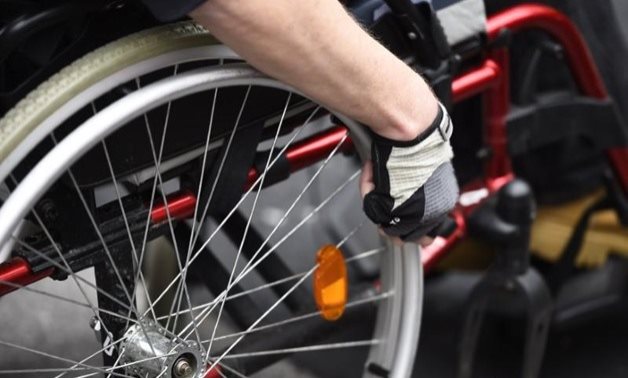
A man in a wheelchair takes part in a protest against cuts to state disability welfare payments in London, Britain, March 23, 2016. REUTERS/Dylan Martinez
CAIRO - 15 May 2025: Egypt's Law No. 10 of 2018 on the Rights of Persons with Disabilities established clear guarantees for persons with disabilities to receive all their entitlements and be fairly integrated into society.
The law includes numerous unprecedented acquired rights, all of which aim to empower persons with disabilities after appropriate rehabilitation. The state works to provide all aspects of empowerment for persons with disabilities, including rehabilitation, healthcare, integration, and equal educational opportunities.
Article (30) of the same law stipulates that the state, ministries responsible for transportation, and other relevant authorities shall be committed to establishing the necessary systems to facilitate the movement of persons with disabilities, including allocating spaces for them on all means of transportation of all classes, categories, and types, reducing the fare by at least 50% of the paid value for the person with a disability and their assistant, and using technological accessibility tools in transportation and communication.
The executive regulations of Law No. 10 of 2018 on the Rights of Persons with Disabilities include mechanisms to facilitate the integration of people with disabilities into society across various categories, sectors, and specialties nationwide, and across various ministries and agencies.
The regulations also facilitate the integration and access to the acquired rights stipulated in the legislation. These regulations include allocating designated spaces for people with disabilities and granting them discounts on all public transportation.
The regulations emphasize that the ministries responsible for transportation and relevant authorities are committed to taking the necessary measures to facilitate the use of roads, sidewalks, and crossing points by people with disabilities. They are also committed to providing the necessary technologies, information, electronic services, and emergency services to address the impacts of their disabilities. They also provide complementary means, equipment, and furniture at reception and information offices, as well as the necessary sanitary and electrical equipment and personnel to facilitate interaction with people with disabilities.
In addition, places will be allocated for people with disabilities on all types, classes, and categories of transportation, and fares for all these means will be reduced by no less than 50% for people with disabilities and their assistants.








Comments
Leave a Comment