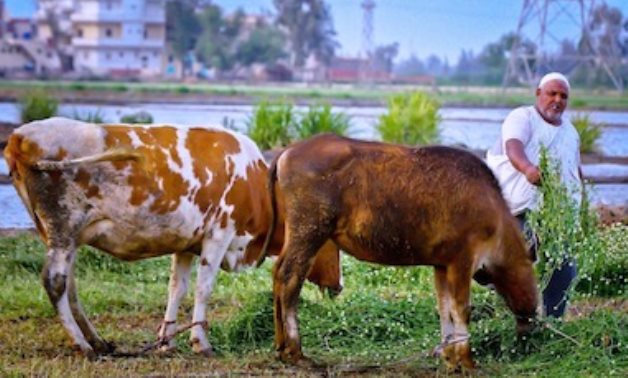
Egyptian farmer in Kafr el-Sheikh - Egypt Today/Hussein Tallal




CAIRO - 8 May 2025: Climate change is significantly impacting animal production and overall health, according to the Animal Production Research Institute.
The impact is felt both in terms of breeding and animal food production. Livestock requires a set of mechanisms to adapt and cope with the effects of climate change.
The destruction of livestock is possible under environmental conditions such as heat stress, which directly impacts the physiological and immune responses of animals. Climate change also affects the incidence of animal diseases and facilitates their spread.
Rising temperatures lead to several changes in the animal, such as loss of appetite, which reduces feed consumption.
It also affects animal immunity, threatening the lives of animals by altering blood acidity, impairing breathing efficiency, heart performance, and kidney function. Heatstroke can also occur, which poses a serious threat to the animal's life if it is not rescued and treated early.
The institute explained that milk production in the summer is affected by continuous exposure to heat. It has been shown that a 1°C increase above the average temperature reduces 10% of milk production during the stress period, and approximately 8 to 10% of meat production.
Milk production is not only linked to feed intake and quality, but also to the high temperatures to which livestock are exposed. High temperatures impact physiological processes associated with lactation, as well as decreased thyroid hormone levels during the summer.
The decrease in fertility rates due to heat stress also has implications for animal exposure to changes in blood chemistry, physiology, and organ function, leading to decreased fertility rates. This makes the summer period particularly impactful for animal fertility and reproduction, resulting in a lower birth rate.
The Animal Production Research Institute recommended increasing green spaces, preserving and planting more trees to reduce greenhouse gas emissions and their impact on the livestock sector, reducing the use of fossil fuels, and utilizing renewable energy sources.
Small farmers represent 75% of animal production in Egypt. Their farms must be managed sustainably by ensuring food security and biosecurity, and by providing a clean, disease-free farm capable of adapting to climate change. This can be achieved by building special pens with a design that allows for movement, providing suitable areas for livestock to avoid excessive sunlight, and providing sources of clean water and good fodder.

Be Social




Comments
Leave a Comment