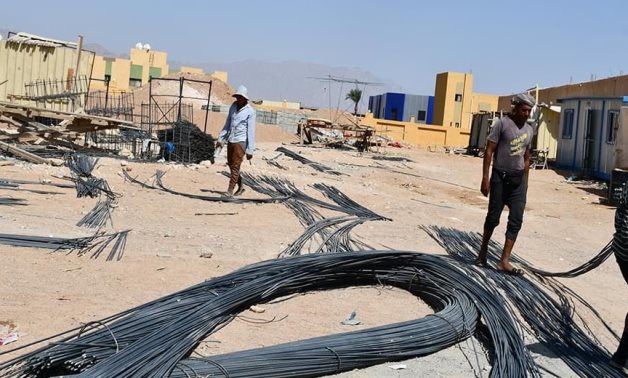
Construction work in Sharm el Sheikh in preparation for the COP- photo from the South Sinai Governorate




CAIRO – 24 April 2025: Once a land synonymous with conflict and sacrifice, Egypt’s Sinai Peninsula is now undergoing a sweeping transformation. Today, this strategically vital region is the epicenter of ambitious national projects that aim to reshape its future, unlocking opportunities for growth, stability, and prosperity.
Driven by a clear strategic vision and strong political will, Sinai is being reimagined as a land of innovation and opportunity. From the northern borders to the southern desert, modern cities are rising, transportation networks are expanding, and integrated development zones are laying the foundation for a sustainable future. Egypt is no longer treating Sinai as just a historic stronghold—it is now a model for progress and national renewal.
New Rafah: A City Born from Vision and Hope
At the forefront of Sinai’s transformation is New Rafah, a city designed to resettle displaced families from the original town of Rafah. Far from being just a housing initiative, New Rafah is a fully equipped, integrated urban space offering residents a new beginning.
The first phase of the project spans 1.5 square kilometers and includes 1,400 residential units, with a total of 4,500 units planned. Additionally, 400 Bedouin homes have been constructed to align with the cultural traditions of the local population. Despite being a newly built city, New Rafah already includes vital services such as a hospital, mosque, event hall, police station, fire department, post office, commercial market, and an educational complex.
The city’s infrastructure—covering water, electricity, and sanitation—has been meticulously installed to support a high quality of life. More importantly, New Rafah reflects a people-first approach, prioritizing safety, dignity, and social well-being. The project was launched in March 2018 by President Abdel Fattah El-Sisi as part of a comprehensive plan to revitalize North Sinai.
Arish Port: A New Gateway to Global Markets
In parallel, Egypt is modernizing Arish Port, transforming it into a key logistics and export hub. Located on the Mediterranean coast in North Sinai, the port is currently undergoing extensive upgrades to enhance its capacity and strategic importance.
The development project includes the construction of new docks stretching 1,165 meters, the extension of the eastern breakwater by 250 meters, and the establishment of storage yards and dredging operations. These enhancements aim to support the export of Sinai’s abundant resources, particularly mineral ores and high-quality silica sand.
More than just a local harbor, Arish Port is poised to become a vital node in Egypt’s national logistics network, boosting regional trade and strengthening the economic role of the Suez Canal Economic Zone.
The Sinai Railway: Connecting the Heart of Egypt
Another transformational project is the long-awaited Sinai railway, a crucial step toward integrating the peninsula with Egypt’s broader transportation grid. This rail line will connect the Nile Valley to Sinai through modern, high-capacity tracks.
The Ministry of Transport has initiated the refurbishment of the 80-kilometer Ferdan–Bir al-Abd line, which will be linked with a new 44-kilometer line extending to East Port Said. Major stations such as Bir al-Abd, Balouza, and Nagila are being upgraded as part of the plan.
The iconic Ferdan metal bridge, spanning the Suez Canal, is also being rehabilitated to facilitate this new corridor. Beyond connecting regions, the railway will act as a catalyst for economic growth, easing the transport of goods and people while encouraging industrial development across the peninsula.
Arish–Taba Corridor: The Lifeline of Trade
One of the most ambitious infrastructure initiatives is the creation of a logistics corridor between Arish and Taba, a vital artery that will connect Arish Port on the Mediterranean to the Taba border crossing. This project is part of a broader vision to create an integrated national transportation network.
The corridor will include 100 kilometers of rail lines from Ferdan to Bir al-Abd and another 44 kilometers linking Balouza to East Port Said. Its strategic value lies in enabling the efficient transport of agricultural and mining goods to global markets and enhancing the role of Arish Port in Egypt’s export economy.
Salam Misr: A Smart City for Science and Commerce
In East Port Said, the government is constructing Salam Misr City, a visionary urban development positioned to become a hub for education, technology, and commerce. Spread across 202 acres, the city will feature 418 residential buildings totaling 8,360 housing units, along with vital public services such as schools, a medical center, police station, fire department, and shopping areas.
But Salam Misr goes beyond residential development. It’s set to include a national university, a regional university, an international research center, an Olympic sports city, a 120-megawatt power station, and a desalination plant with a capacity of 150,000 cubic meters per day. This integrated model positions Salam Misr as a beacon of future-ready urbanism in North Sinai.
Sustainable Development Clusters: Thriving Communities in the Desert
In the heart of central Sinai, particularly in Nekhel and Hasna, Egypt is establishing ten development clusters aimed at creating sustainable, self-sufficient communities. Each cluster includes housing and five acres of farmland for every beneficiary, along with schools, mosques, sports facilities, and administrative buildings.
Residents from various governorates have relocated to these areas, bringing life to previously undeveloped lands. Villages such as Nethila 1 and 2, Sadr al-Hitan, and Khefga exemplify how desert regions can be transformed into productive, vibrant communities that offer employment and promote food security.
A Strategic Vision for a Prosperous Sinai
What is unfolding in Sinai today is more than just infrastructure development—it’s the construction of a comprehensive future. These national mega-projects not only improve local livelihoods but also contribute to Egypt’s national security, economic resilience, and demographic balance.
The state’s commitment to turning Sinai into a strategic center of growth, where trade routes intersect and new cities flourish, marks a pivotal chapter in Egypt’s development journey. With each road built and each community established, the seeds of a new future are being sown—one of opportunity, sustainability, and enduring national strength.

Be Social




Comments
Leave a Comment